
Low Waste Holiday Wall Decor for Small Spaces
Creative, low waste alternatives to Christmas trees for small spaces.
Not enough room for a tree in your small space? Here’s one easy way to use fresh greenery to create space savvy holiday decor for a small home. (View the 30-second video here.)

List of supplies:
Live branches
A bit of rope
A nail or damage-free Command strip
Battery-operated twinkle lights (we use rechargables)
A zip tie (to attach the battery pack to the back of the branch)
Clippers
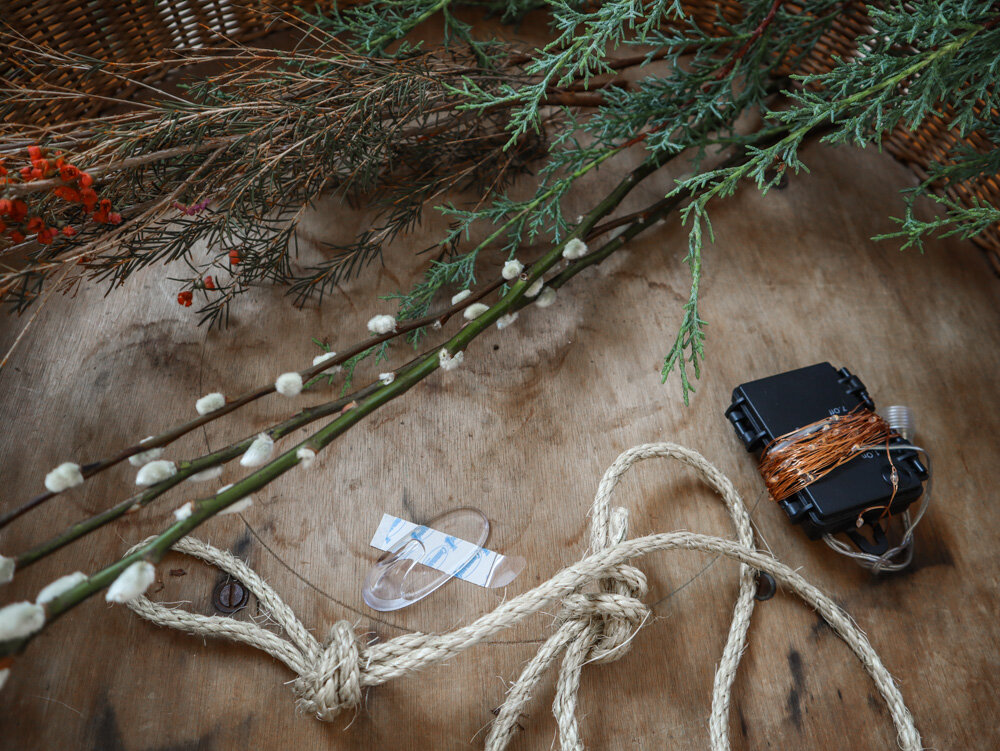
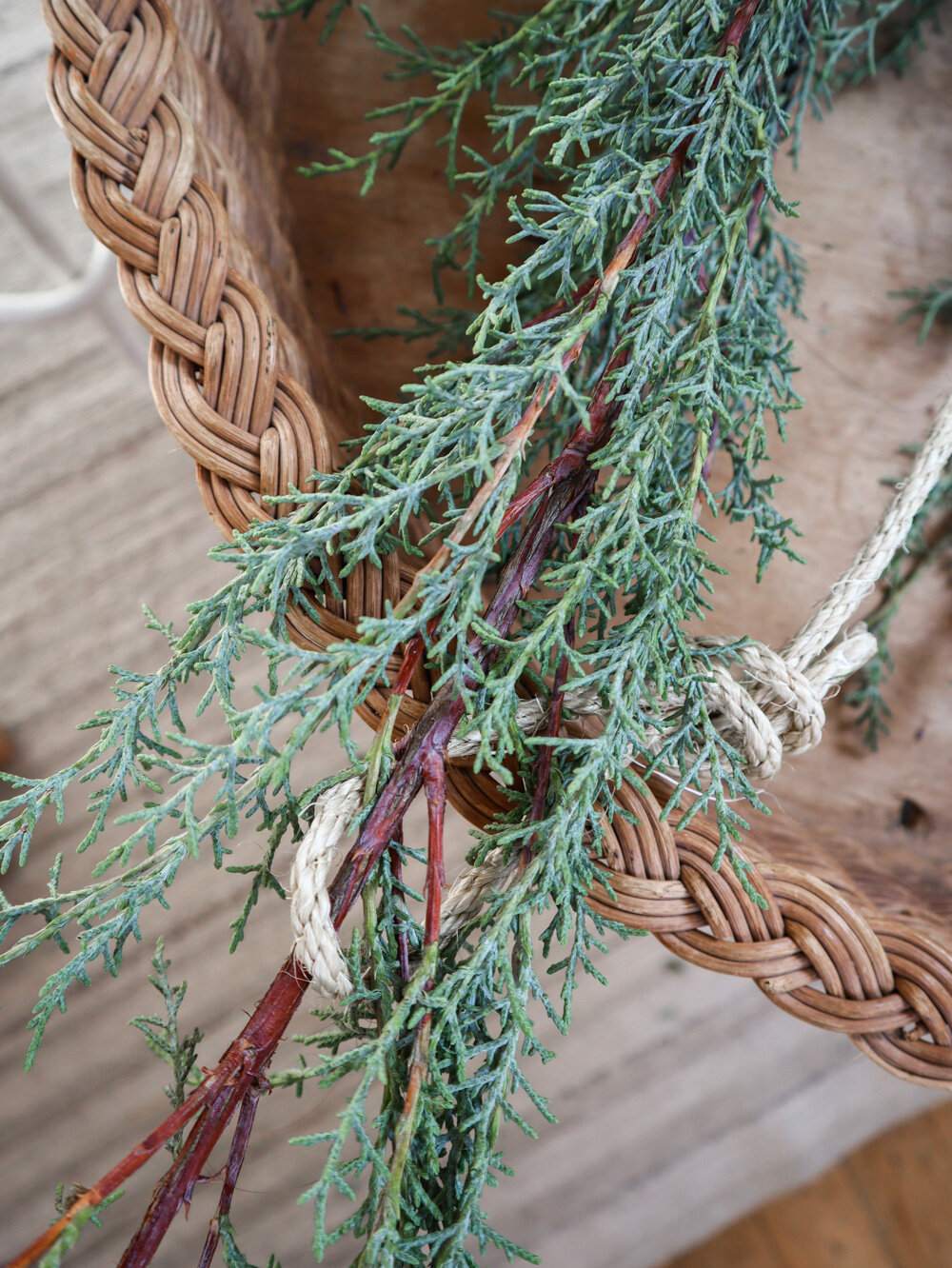
I simply wrapped the twinkle lights around the branch, tied the rope to either end, suspended the entire piece from a sturdy wall hook, and then added small florals and twigs throughout the branch for a pop of color and variation in texture. I carefully spritz the branch with a bit of water every few days, and replace the bright floral clippings as needed after they’ve fully dried up.

The final result is simple yet striking. And, best of all, at the end of the season the rope, hook and twinkle lights can be reused, and the greenery can go in the compost.


A Dramatic, Space-Saving Holiday Table
Creating a space-saving, dramatic, festive table of live greenery for the holidays.
(Originally posted in 2019)
Gathering with friends and/or family around a table in a small home or apartment can be such a uniquely intimate experience. But during the holidays— when we tend add extra decorative touches and welcome more people to the table than usual— surface space needed for tabletop essentials can suddenly become extra challenging to preserve.
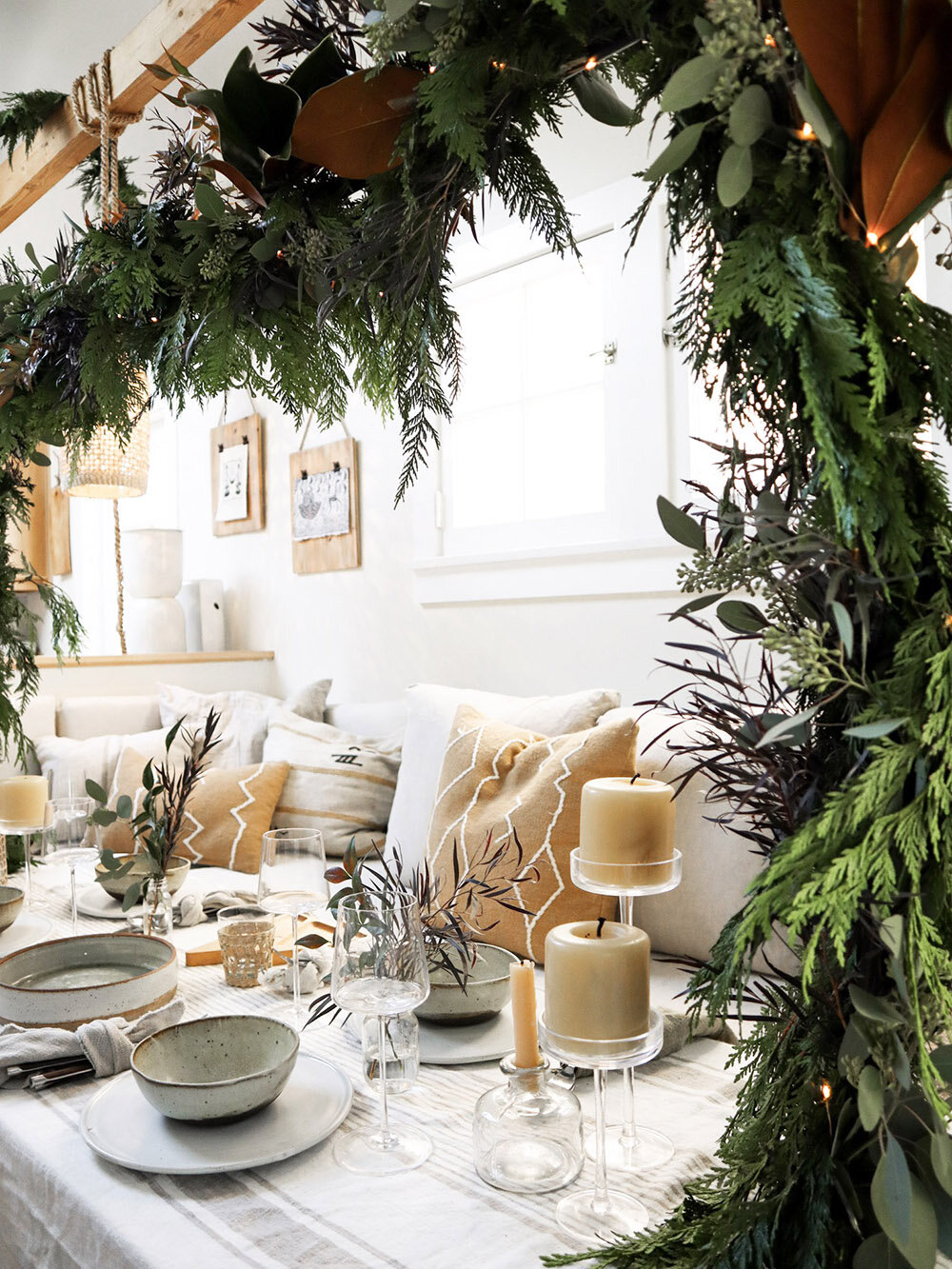
Certain items can help with this, such as rectangular plates and pedestal/cake stands. (Skipping some of the superfluous things you don’t need, such as napkin rings, chargers and placemats can save inches as well.) But if you want to add some wild branches or lush floral/greenery/dried bouquets to your table, you might be out of luck. As such, I wanted to demonstrate an easy, low waste way to add striking decor to your table without sacrificing your dining surface. (I also offer up additional suggestions in my book: Small Space Style.)
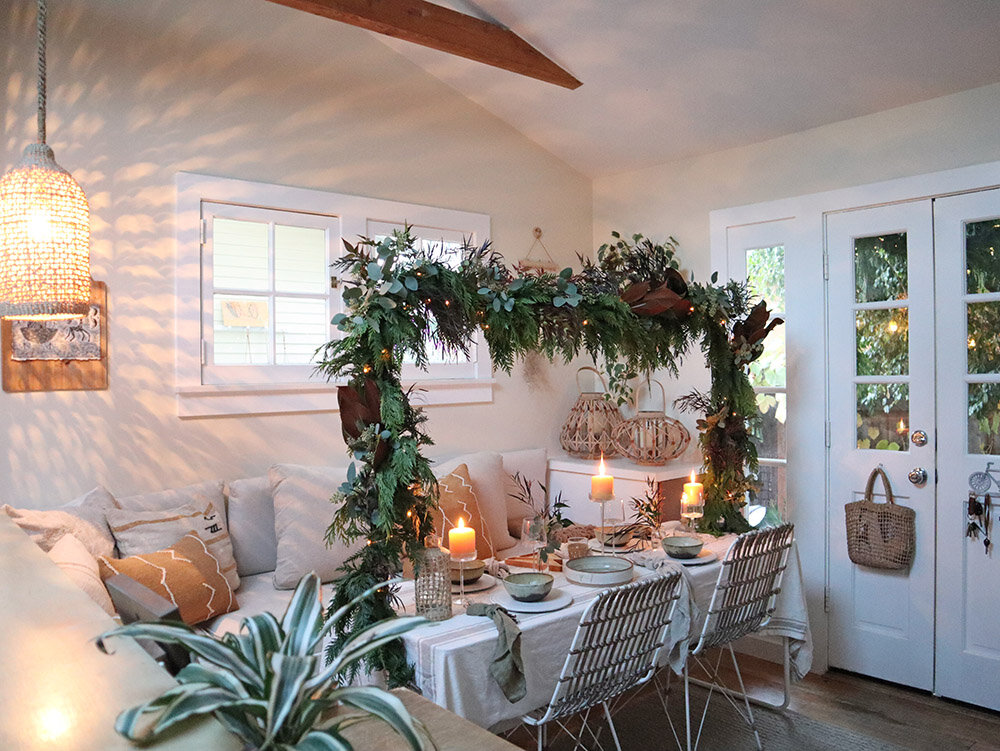
This display cost me about $150. I bought the garland and branches from a local shop, and used an over-the-table adjustable iron rod and battery operated twinkle lights (with rechargeable batteries) to create an overgrown and glittering display indoors. (I used real candles for the photos, but swapped them out for battery operated versions for safety after we snapped the images.) A bit of floral wire (and a vacuum) were the only other items I needed to attain the look.


Setting up the iron display rod took only a few minutes. The height is fixed, but the width is adjustable. When the setup is no longer needed, it breaks down easily for slim storage.

I used all living branches and clippings, so everything can be composted when the time comes.


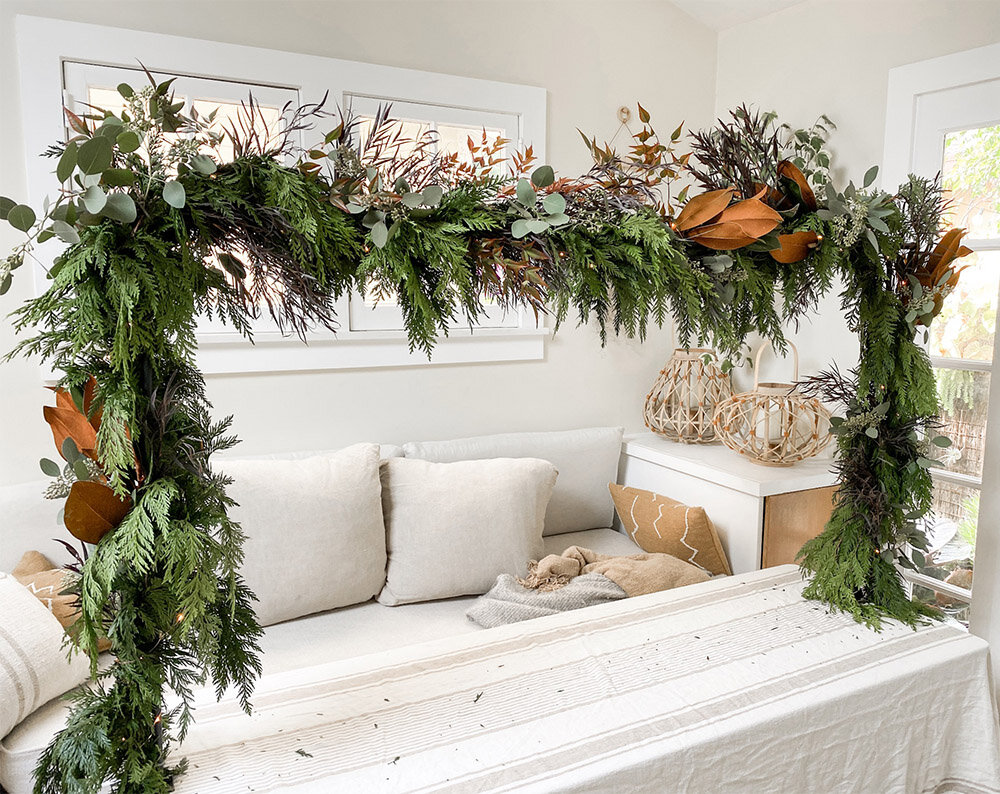
Adding the clippings to the garland took the longest, but was simple enough.

The entire process took about 90 minutes, and it was a surprisingly relaxing activity for me.

I (still) don’t really cook, nor do we host that often these days, so I enjoyed going out of my way to do something special for the guests we’ll have over in the coming days.

I’ll share a small space, low waste holiday decor video and post in early December.


In the meantime, I’m looking forward to spending time with our friends and family here at home. (And I’ll be following along with The Conscious Kid for insights and information regarding Native American Heritage Month.)

Whatever you and yours are doing this holiday, we wish you a safe and happy long weekend.


Greenhouse Garden Plan
Note: This is a follow-up entry to our recent Climate Action Landscaping post.
When mapping out the design of our new greenhouse, it was important to me that the land beneath and surrounding the platform become a thriving outdoor space that protects biodiversity, grows food + medicine + pollinator habitat, builds soil, and restores the water cycle. For insight on how to accomplish this, we turned to our friends at Shades of Green Permaculture.
Via a 2-minute video, I provided Shades of Green with a tour of the land, and communicated my goals for the outdoor space. In return, Brandy created the following plans, as well as the incredibly informative video embedded at the bottom of this post.
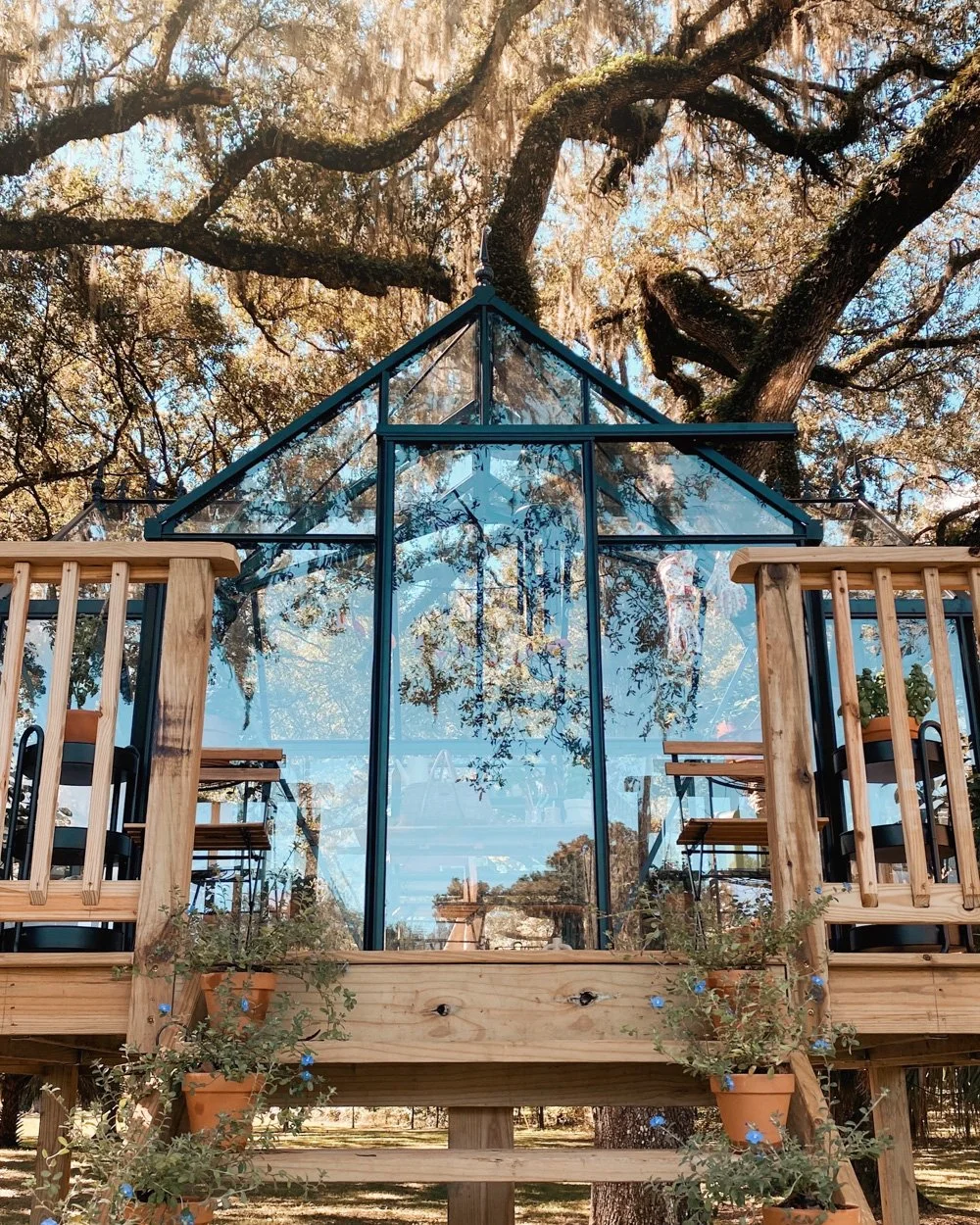
Our greenhouse, which was a kit we found here via The Home Depot.
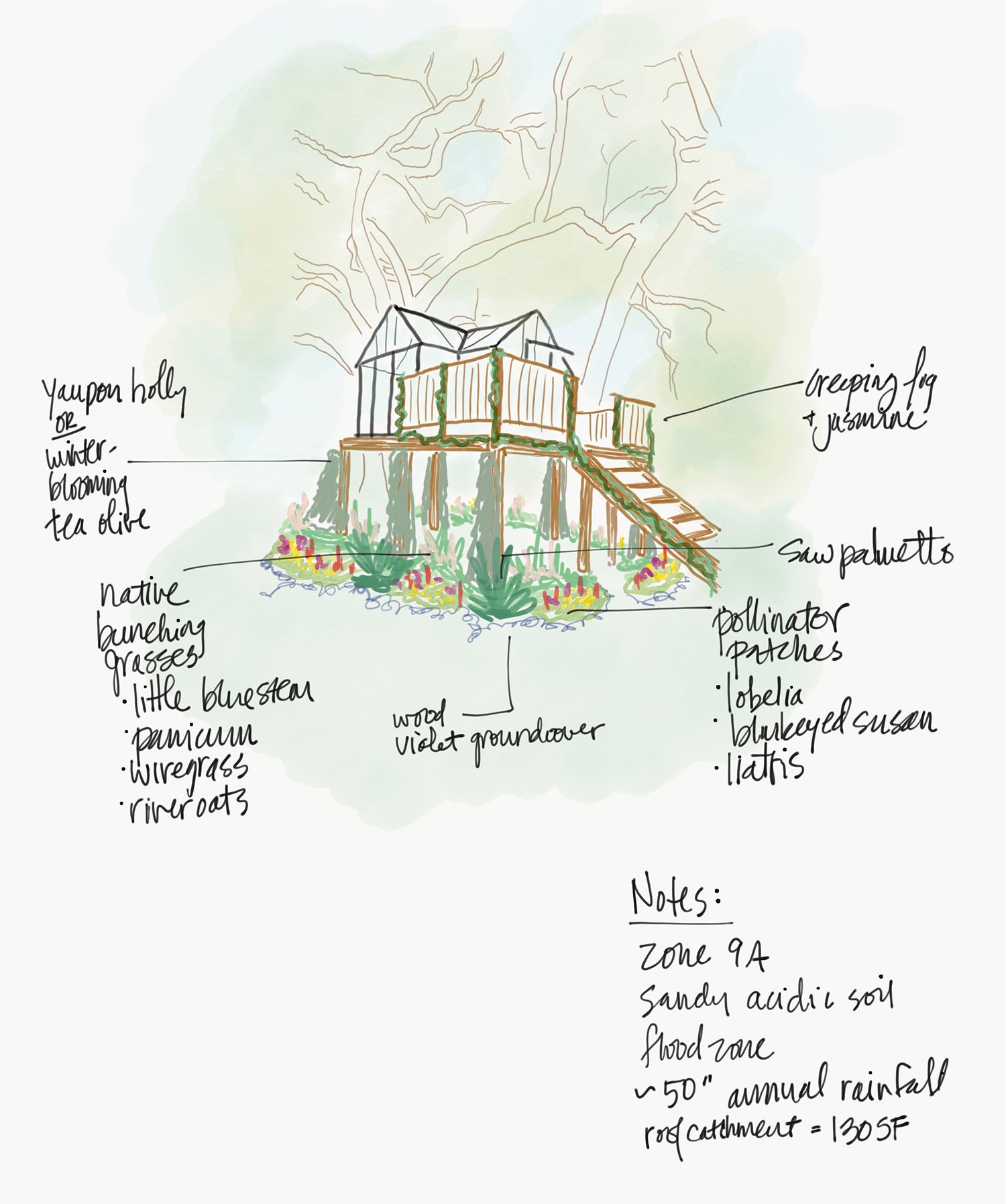

Adam and I hope to tackle this project immediately, prepping our fall garden starting this month. However, the entire scope of work will have to wait to roll out as our budget permits.
Our first step is to reduce our watering and build soil by creating hugelbeds, which are mounded beds that blend water management, debris management, and soil building into one strategy. We’ve already started gathering materials for the process:

If you steward any amount of land, you can transform it into space that has a positive environmental impact. Shades of Green Permaculture are offering a free, 1-hour training class entitled: Intro to Climate Action Landscaping. This training focuses on how a garden or landscape, no matter the size, can have a positive impact on the planet. And, if you find what you learn to be of interest to your home and lifestyle, Shades of Green Permaculture also offers an incredible Regenerative Backyard Blueprint: A step-by-step guide to transform your yard into an eco-friendly paradise.
We’ll share our entire process with you as it unfolds!

Last Minute Halloween Decor
I have a 5 year old who is, of course, thrilled by Halloween. And yet I cannot seem to get it together to decorate for the occasion this year.

In the past, while living in Venice, we would simply hop on our bikes or walk the pups through the canals to get our fill of spooky ghosts in palms, witches riding brooms on balconies, and pumpkins baking themselves in the SoCal sun. Here in the woods, however, I can no longer rely on neighbors for our fall fix. But, between running the business while in a state of limbo as far as our home is concerned (though we’ve made great progress this week — more on that soon!), the baby’s current sleep pattern, and the ongoing realities of life during the pandemic, I’ve felt depleted of the sort of creative energy that fuels festive DIY home projects… at least for the time being.

Luckily we do have a handful of old metal pumpkin stakes, which we can use on the pumpkins that we’ll get at a patch later this week. (The photos of the stakes in this post are from last year’s Halloween at the Cottage.)

Other than that, the only thing I’ve managed to muster is a dozen or so paltry paper bats, which we’ve clipped to the playroom / nursery curtains with clothespins, as well as taped to the end of chopsticks to use as shadow puppets. (These types of paper cutouts are often at craft supply stores, but they’re also easy to make at home with a compact Circuit Joy.)

Surprisingly the bats have satiated our little one. So much so that he rearranges the paper and pins while making up stories about the animals during the day, before grabbing a flashlight and continuing the activity in shadow puppet form at night.

All this to say: for those who are too exhausted to magic up a festive stoop or haunted house this Halloween, you’re most definitely not alone. Thankfully, all these wonderful children of ours seem fine with skipping the bags of landfill-bound faux spiderwebs and plastic cauldrons as long as they feel seen, heard, and loved.

Climate Action Landscaping
Post Summary: Your garden, no matter the size, can have a positive impact.

When we first moved into our tiny cottage by the canals, we found cracked dirt throughout our L shaped yard, which was little more than a shared thoroughfare with our neighbors. Over the years, the earth was transformed into rich soil, vines and plants began to grow and thrive — providing us with food and shade while supplying a habitat for hummingbirds and pollinators, and our vertical gardens produced colorful, low maintenance herbs, veggies, fruits and flowers that enhanced our privacy and cooled our small space in the hot SoCal summers.

If you steward any amount of outdoor space — whether it’s a small thoroughfare garden like ours at the Cottage in the city, a suburban yard, or rolling acreage, you can transform it into space that has a positive environmental impact.

Our friends at Shades of Green Permaculture are offering a free, 1-hour training class entitled: Intro to Climate Action Landscaping. This training focuses on how a garden or landscape, no matter the size, can have a positive impact on the planet.

If you find what you learn to be of interest to your home and lifestyle, Shades of Green Permaculture also offers an incredible Regenerative Backyard Blueprint: A step-by-step guide to transform your yard into an eco-friendly paradise. The “RBB” will teach you how to create a thriving outdoor space that protects biodiversity; grows food, medicine, and pollinator habitat; builds soil; and restores the water cycle.

By the end of the Regenerative Backyard Blueprint program, you will have:
An understanding of the climate context and why your decisions matter so you can build your garden in alignment with your values, knowing the bigger impact of your decisions.
Clearly articulated your project goal, and have a realistic idea of phasing, timeline and budget.
Made a basemap, and put pen to paper to get accurate measurements and map necessary existing conditions, having identified priority areas and elements to include in your plan.
Correctly diagnosed the challenges you face with water in your yard, and know how to manage that water as a resource.
Spotted opportunities to build soil on your site, and identified which techniques are best for your site.
Made sound choices for plant palettes, have a sense of vegetation types, and know where to go and what questions to ask when searching for the perfect plant.
Crafted a solid plan for your landscape, with associated material and plant calculations, and have a clear understanding of what is needed to execute your project.
Registration is open from October 12th through October 25th at Shades of Green Permaculture.

Using Our Tiny Greenhouse as an Adaptable Sunroom
How we styled our ~114 sqft greenhouse to function as an easily-adaptable office, an activity space for our child, a quiet reading lounge, a dining / gathering space, and a grow zone.
Summary: How we styled our ~114 sqft greenhouse to function as an easily-adaptable office, an activity space for our child, a quiet reading lounge, a dining / gathering space, and a grow zone.

Our tiny greenhouse is a T-shaped design that straddles the sunny field of the prairie and the cool canopy of the oak trees. It’s propped up on a tall deck, resembling a house on stilts, as it’s required to sit above the flood zone in this region.


The goal behind this space was never for it to be used purely as a grow zone, though we do intend to use it for seedlings and select greenery.


Instead, it is meant to be fluid and adaptable, just all of my favorite small spaces.

Its uses already include an office, an activity zone for our child, a quiet reading/writing lounge, and a dining/gathering room.

This post contains images of the default set-up, which contains areas for working, lounging, potting and playing. The post does not contain images of the dining set-up, though it’s not hard to envision. (It also doesn’t reflect the recent railings we added to the platform the day after I captured these photos.)

Almost all of the pieces in the space are collapsible, from the standard chairs, to the second-hand potting bench from the cottage, to the corner shelves, and the desks/tables.

The remaining furnishings are lightweight and easily mobile. The focal points on either side — with a stunning view of both the woods and prairie — are two long, slim loungers from Serena & Lily.

We also have extra folding tables and chairs so we can create a farmhouse-style dining setup inside the greenhouse (after relocating the loungers), or just beyond the platform in the grass leading to the prairie:
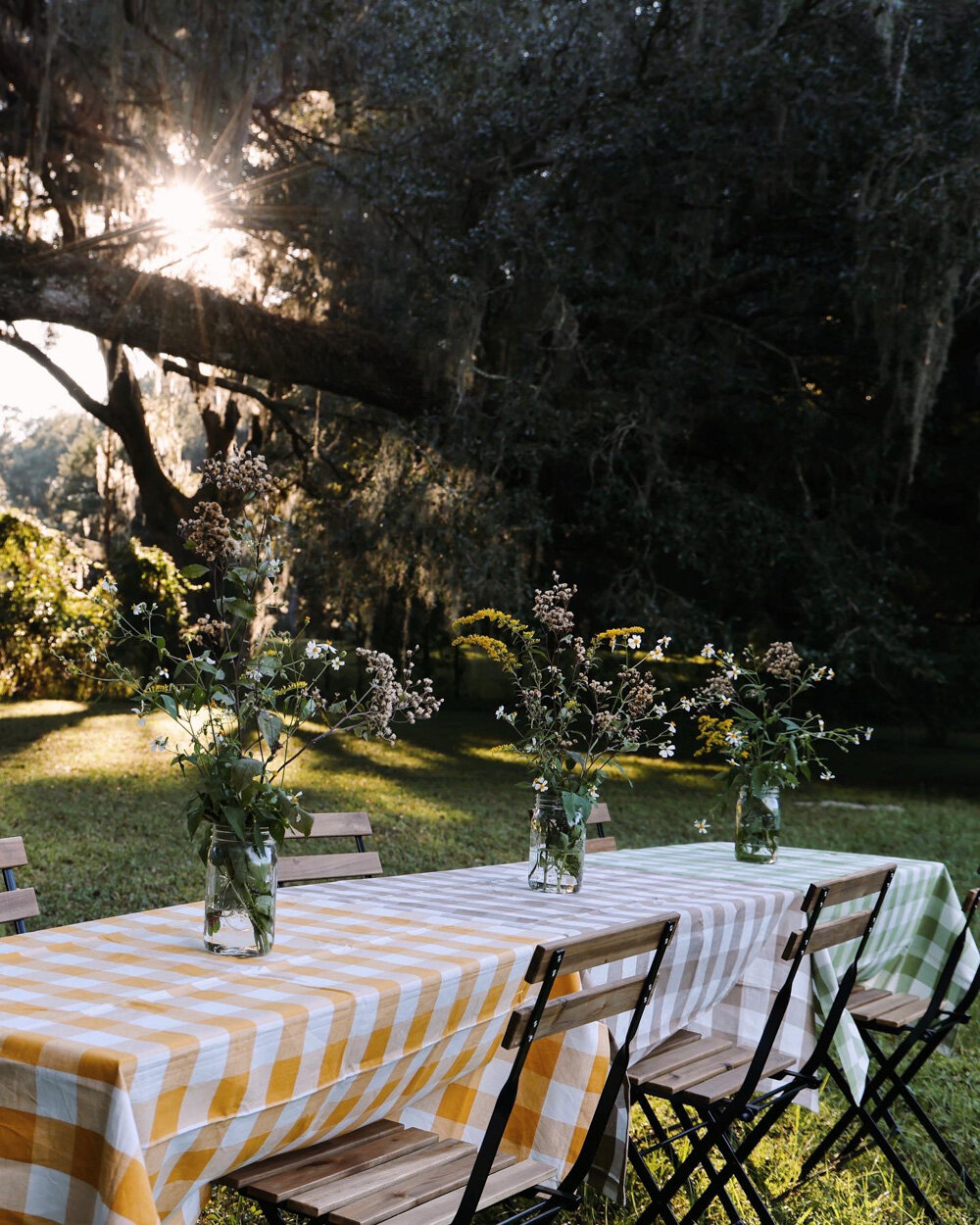
By leaving a few extra feet in front of the greenhouse door, we’ve been able to create a useful stoop, where we rehabilitate and grow plants from/for elsewhere.

Two spare folding chairs sit out front, offering views of the prairie and a place to take off muddy shoes or drop bags of soil.

For pops of playful and functional decor, we placed gardening gloves, tools, aprons and bags to the framework along the walls.

We added beautiful bolster pillows (in moss/white ticking) from Serena & Lily, an extra-long doormat (inside the sliding glass door), cafe lights, a patio rug, and a fan to help the ceiling vents and front door cool the room a bit when needed.

We also have useful items such as reusable cleaning cloths, candles, tablecloths, matches, etc. tucked out of sight but easily within reach.


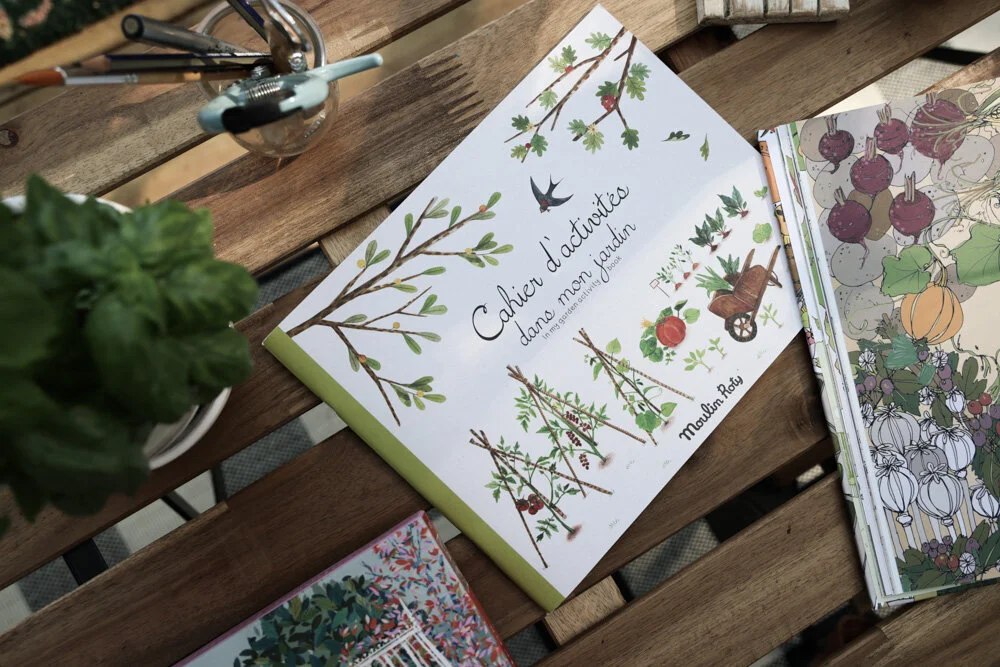
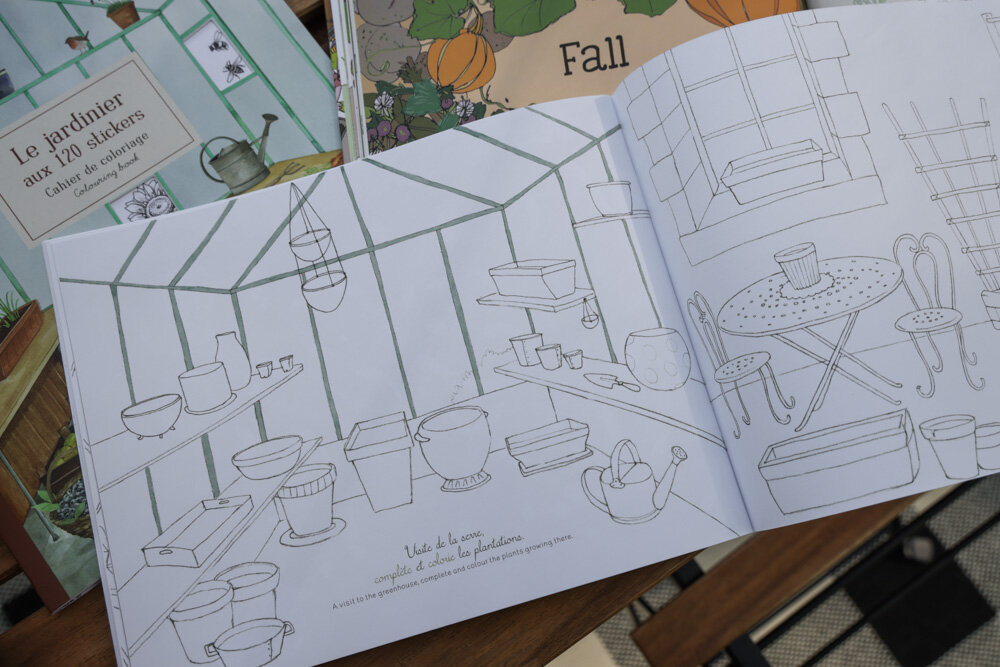
We rounded everything off with a gardening-related selection of books, games and tools for growing and learning in both French and English for our five year old.


I’ve found that I truly am so much more creative and content when working with small spaces. This little greenhouse has reignited a feeling I’d lost track of this year in my stress and uncertainty, and I’m excited to get to fully use and know this space with my family throughout the upcoming cooler, festive months.


Travel with a Baby & Pre-K Child
During our past trips overseas, Adam and I prided ourselves in packing lightly— carry-ons only, even with a child and the essentials for running my small business from afar in tow. However, on this voyage to the farmhouse with our (then) 4 month old and 4 year old, we decided that the most important goal was to have our hands free as much as possible.

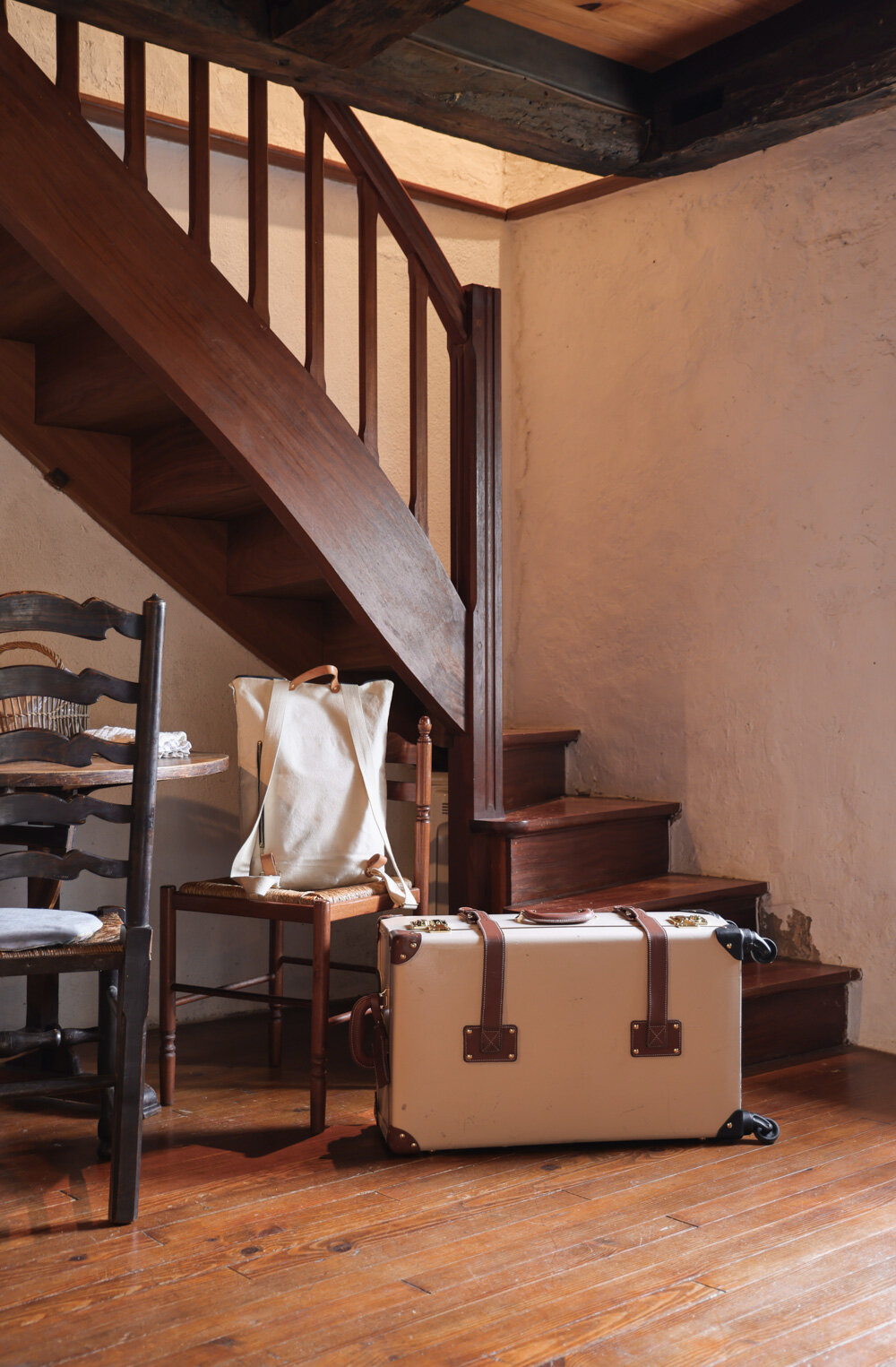
We packed 2 checked bags: one with clothes and shoes, the other with necessities and the Dock-a-Tot. We carried 2 backpacks: one diaper bag, one tech/work bag. And West had his little rolling suitcase, which held his books + toys, while also operating as a ride-on surface through the airport, and as a foot-rest / “bed box” for the airplane rides. We didn’t bring a stroller or carseat, opting instead for a baby carrier (like I mentioned, hands-free!), and rental safety seats upon arrival. All-in-all it was more than we would’ve liked to bring, but during our stay we repeatedly used every single item we brought.

Some items that made the packing and travel process smoother for our family at this stage of our lives are listed below:
Airline Bassinet
Did you know that on some longer flights — depending on the airline and plane model — you can request a baby basinet seat ahead of time? (There’s no extra charge.) The basinet seats are located in the bulkhead aisles of the planes, which we find to be an extra bonus for tall / long-legged folks such as ourselves. With these seats, West’s adaptable suitcase had to be stowed for take off and landing, but could be in use otherwise, as we weren’t in an exit row.

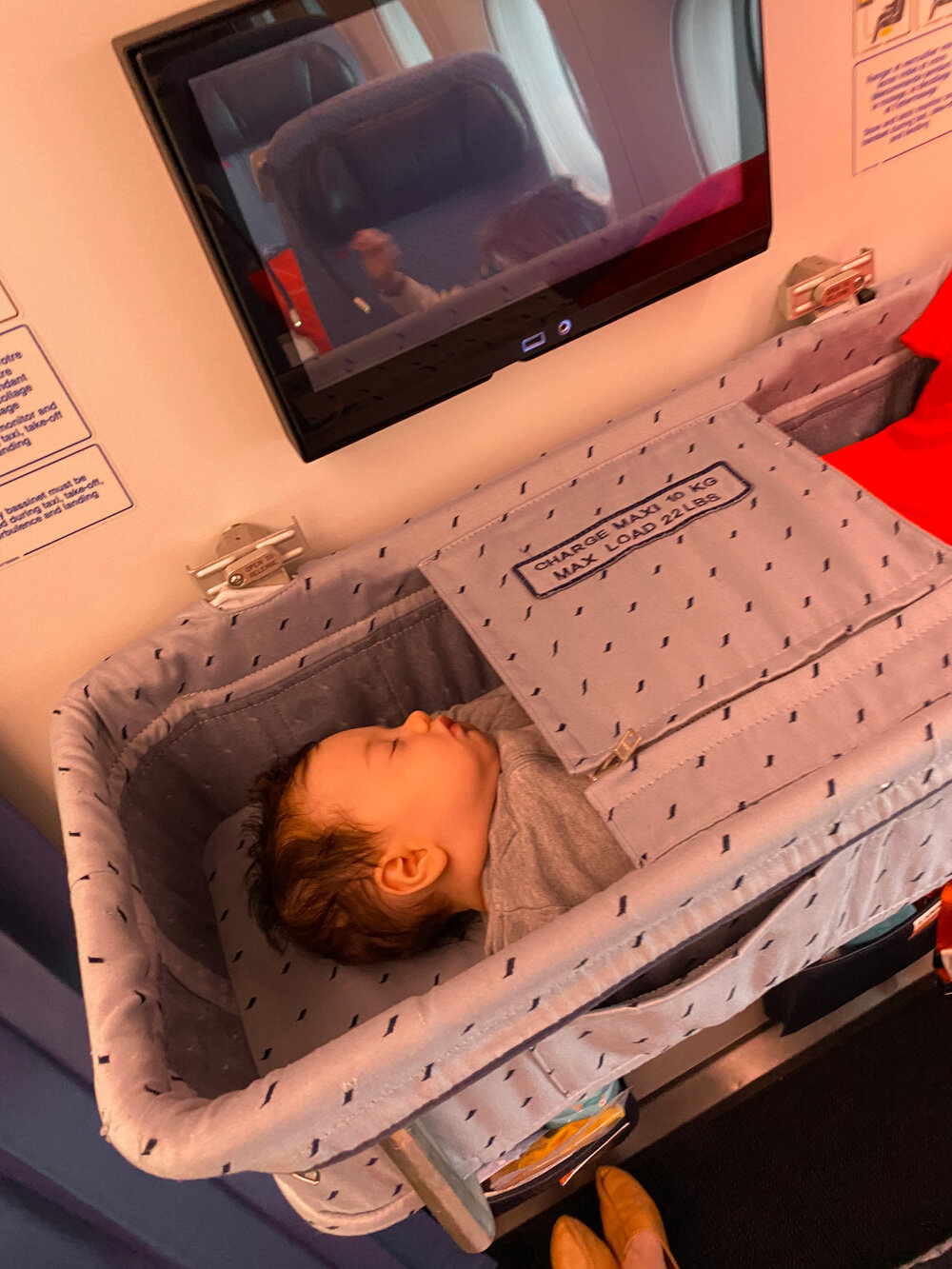
Some notes about the bassinet per the flight crew: The unit is unfolded and affixed to the bulkhead wall by the crew after takeoff, and stowed prior to landing. The baby’s head has to remain on the side of the bed that’s closest to the oxygen masks. (In the embedded video, we had the baby in the opposite direction and ultimately had to rotate her position.) The baby needs to be out of the bassinet and secured via the airline-provided belt extender loop for take off and landing, as well as turbulence.
Child Safety Bracelet
Click here
Adam and I gave West a customized safety bracelet for the trip. It contained our names (not his) and phone numbers. We explained to him that in the event he became separated from us, that any official behind a counter at the airport could locate his parents if he showed them his bracelet.

Reusable Water Bottle & Cutlery Set
For each of us, we have a small set of reusable cutlery (no knives for air travel) and stainless steel bottles for refilling at airports.

Kid’s Combo Suitcase
Click here
This ride-along suitcase hauls items and easily becomes a seat, footrest and bed-like adapter for airline seats for a child. Upon booking our tickets, we also verified that it was approved for use on the airlines we selected.

Lightweight Nursing-Friendly / Wrap Sweater
Click here
This isn’t a nursing duster, but it works well for chilly plane rides and an added touch of privacy.
Dock-a-Tot
Click here
Whether traveling or at home, the Dock-a-Tot is one of our baby essentials. It’s particularly wonderful for small spaces.
Vintner’s Daughter Travel Set
Click here
Other than SPF and my yearly bar of tea tree + charcoal face soap, the only skincare product I use daily for my face is this duo set by Vintner’s Daughter. They just released a travel version, which is long-lasting and easy to tote.

Roll-Up Art Case
Click here
Although I use this to carry some of West’s supplies, I must admit— it’s mainly for me.
Kid’s Crayon Roll
Click here
Since day one, this has been our go-to crayon roll at home and during travel of any kind.
Kid’s Roll-Up Playmat
Click here
This little mat is easy to tote, and is perfect for play as well as an on-the-fly placemat for snacks.
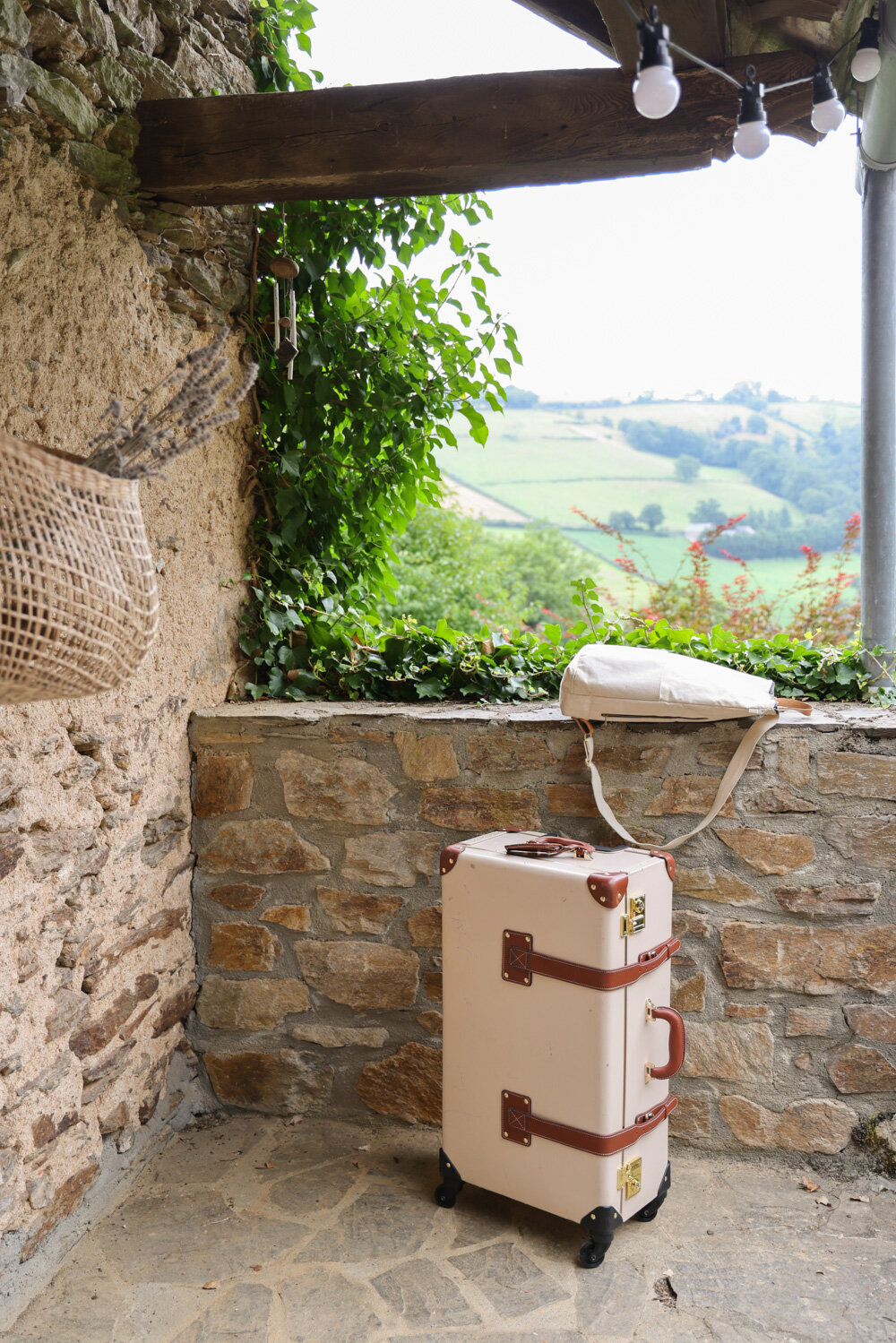
Steamline Luggage
Click here
We love our Steamline bags! However, I recommend them more for carry-on or car travel, rather than as checked bags, simply because they’re so beautiful and I cringe to see them dinged or scuffed!
Lauren Groff’s Matrix
Click here
I read this upon our return from the farmhouse, but I wish I’d had it on the trip. Groff’s stunning writing can transport her readers anywhere in mere moments, and would’ve been fantastic to absorb during those jet-lagged nights spent nursing.
Cord / Tech Organizer
Click here
Passport Cover + Luggage Tag
Click here
A Compact Thoroughfare Laundry Room Makeover (<$250)
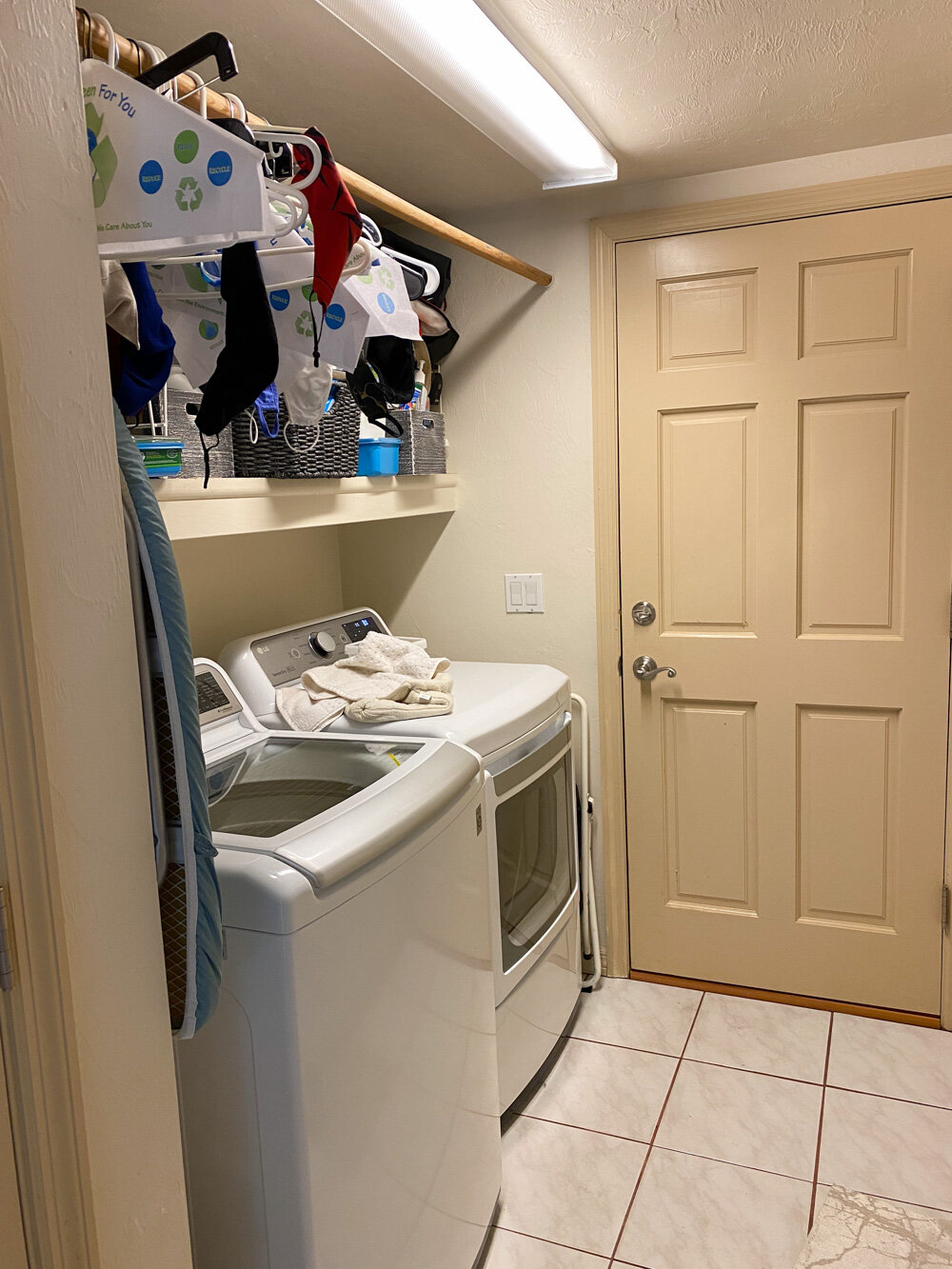
For thirty years, my folks have been meaning to spruce up their tiny, windowless, thoroughfare laundry room. They enter and exit their house through this compact space multiple times per day. Not only has the room been long overrun with household cleaning products and dog gear, but it’s now also packed to the gills with all the typical COVID-era necessities as well.
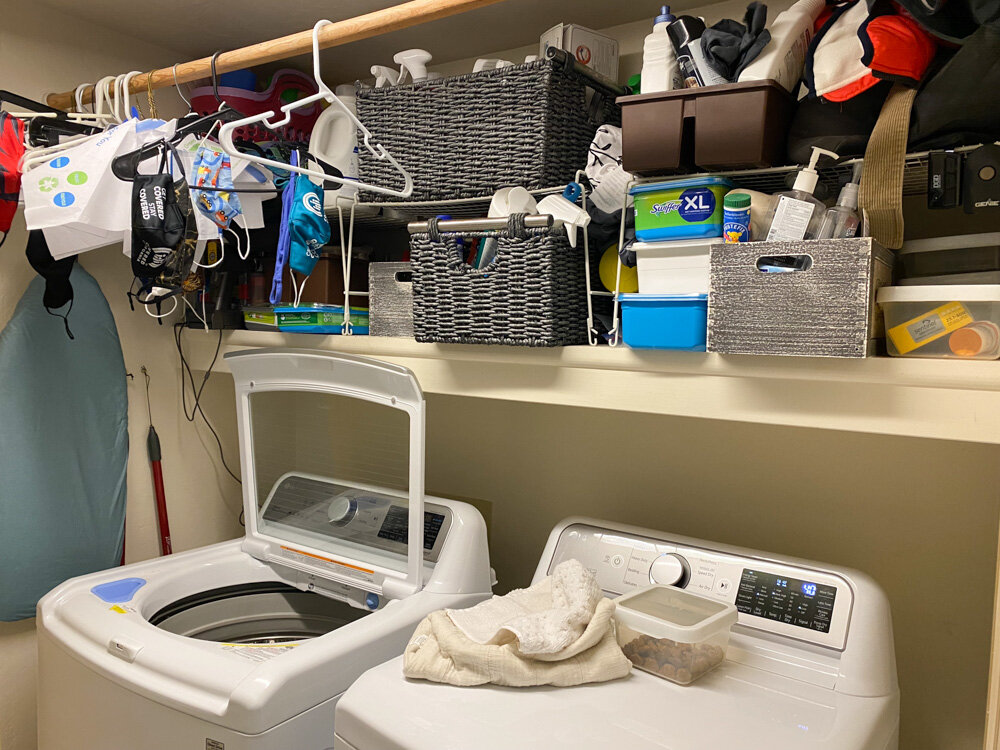
The main issue with this hallway / muck room / laundry bay isn’t its size. It’s that the overflowing supplies are on full display when the interior door to the room is ajar, which it usually is since for one reason or another.
Upon returning from France, I decided it was time to finally tackle this mini-makeover, and make it an area that my parents could keep as-is once completed, or upgrade guilt-free in the years to come. As with most of my projects of this nature, I wanted to work with that we already had on-hand to minimize waste. And since we have large projects underway (such as the restoration of the farmhouse roof and the building of the prairie ADU), I wanted to keep the updates under my budget of $250.
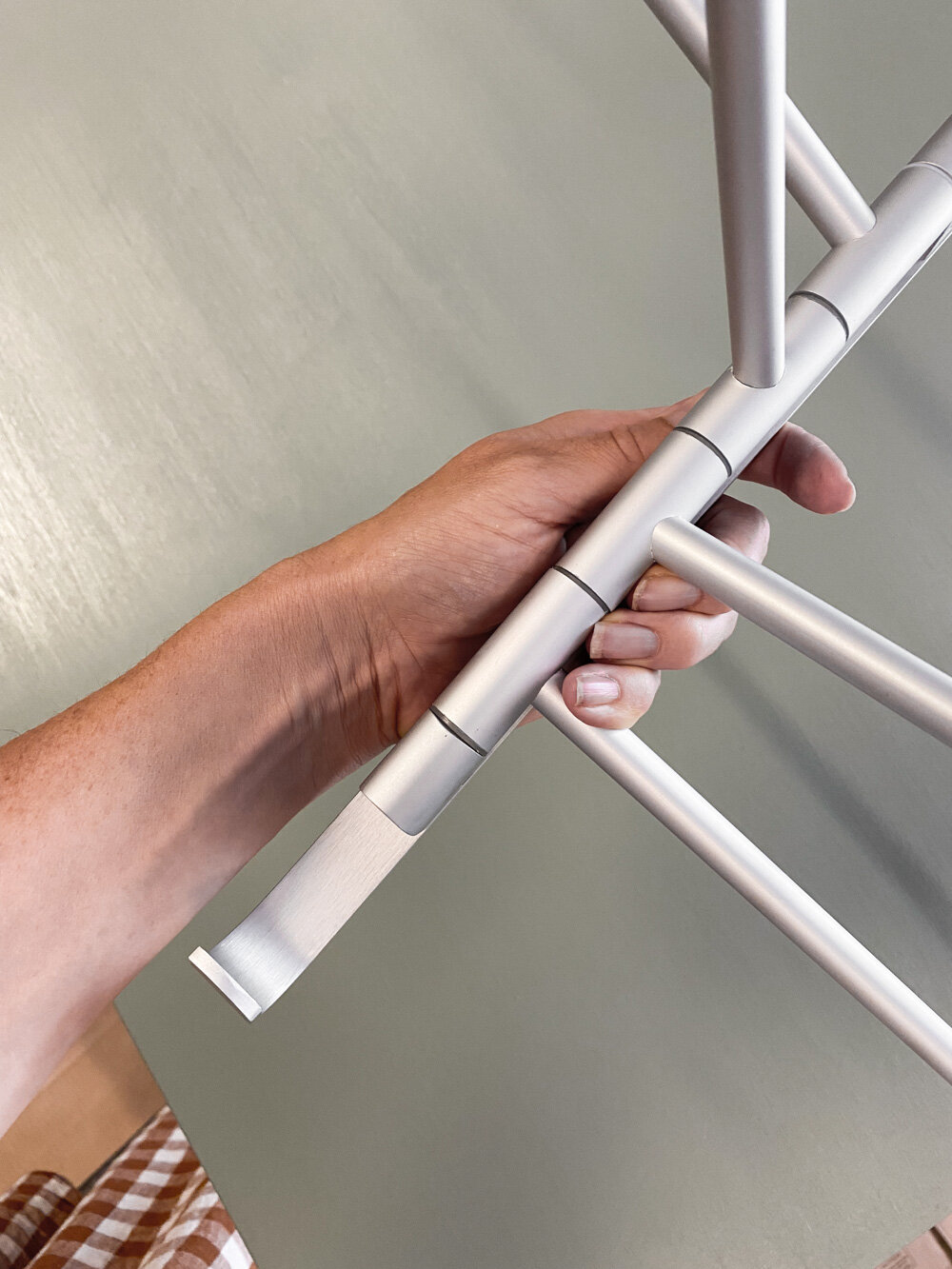
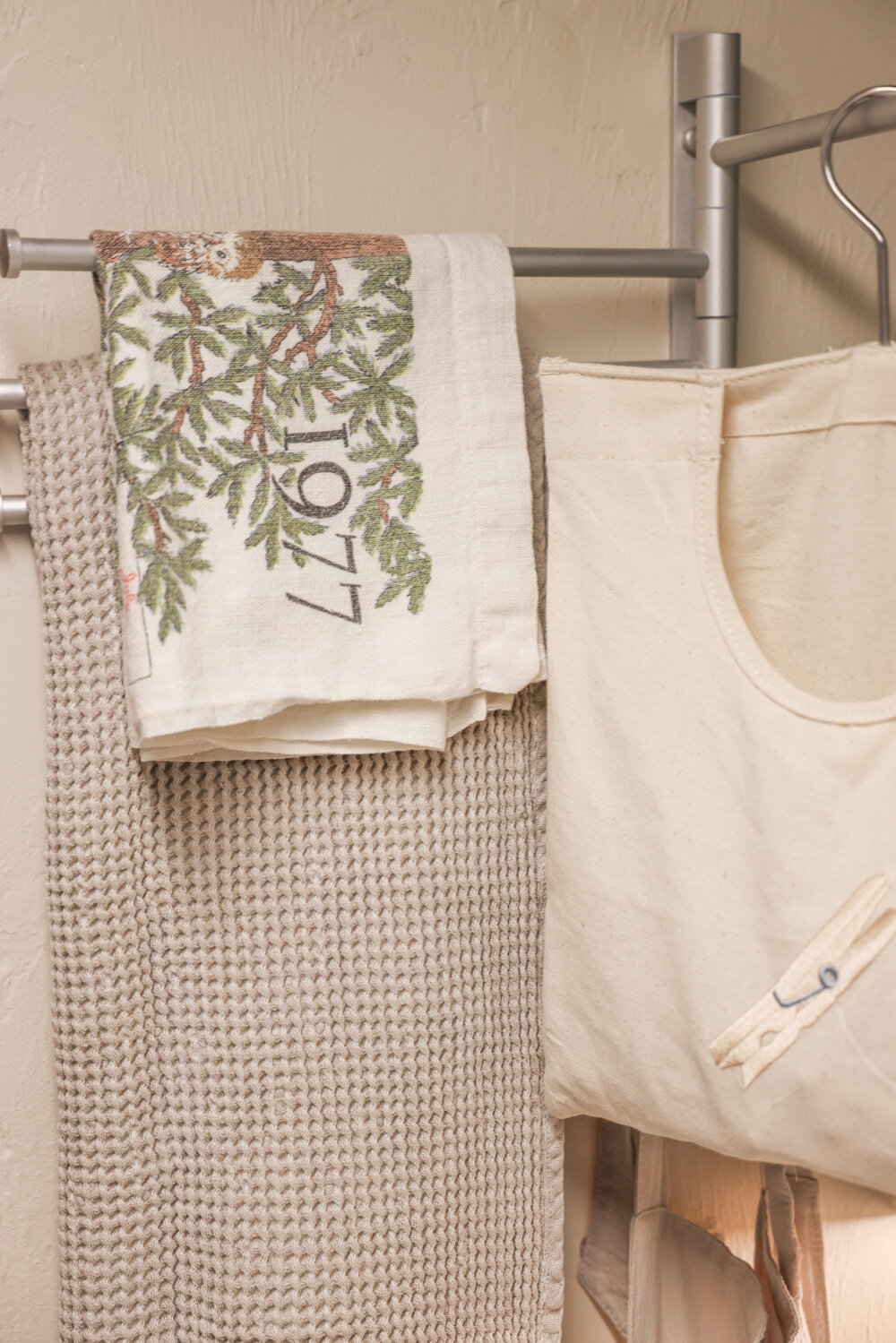
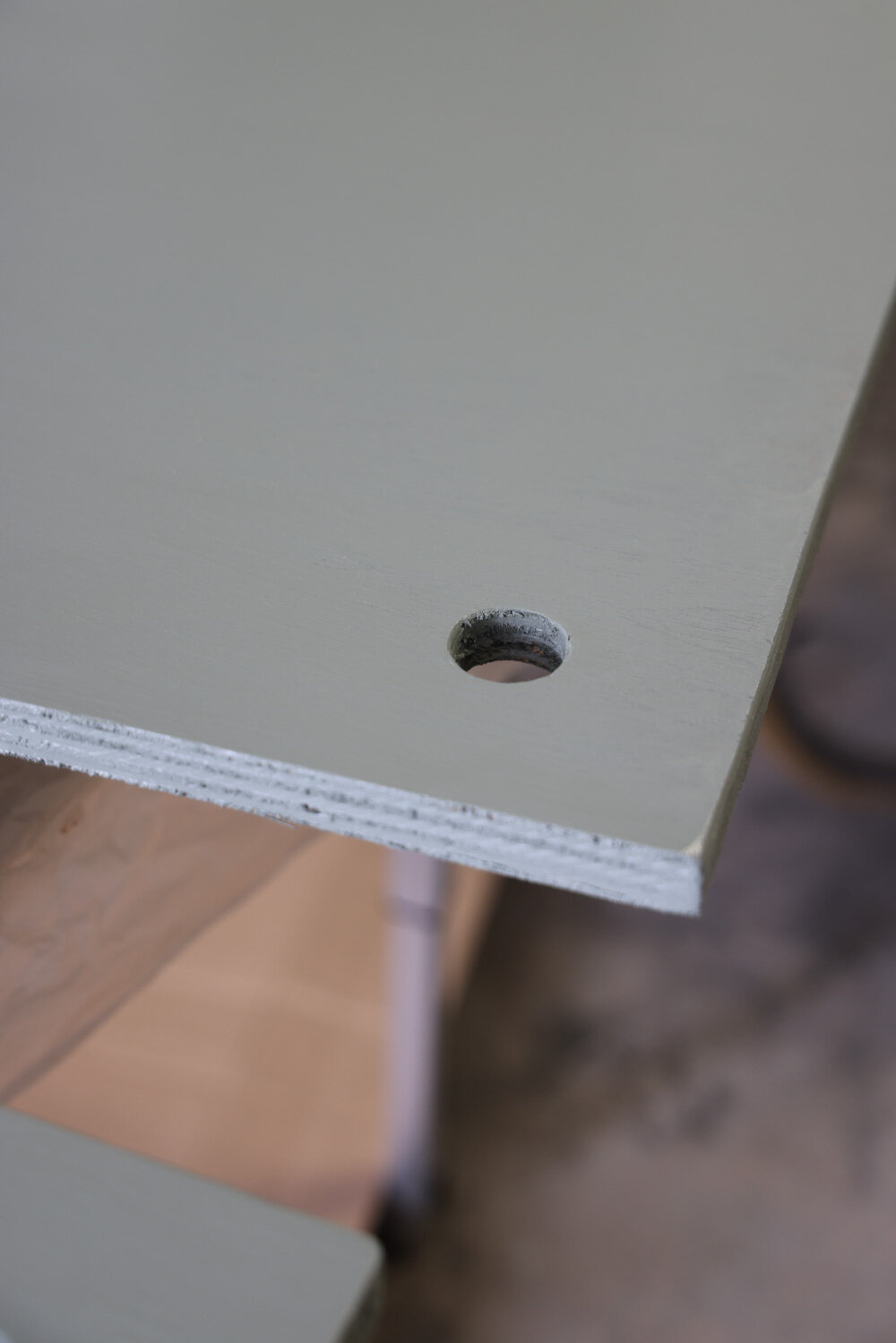
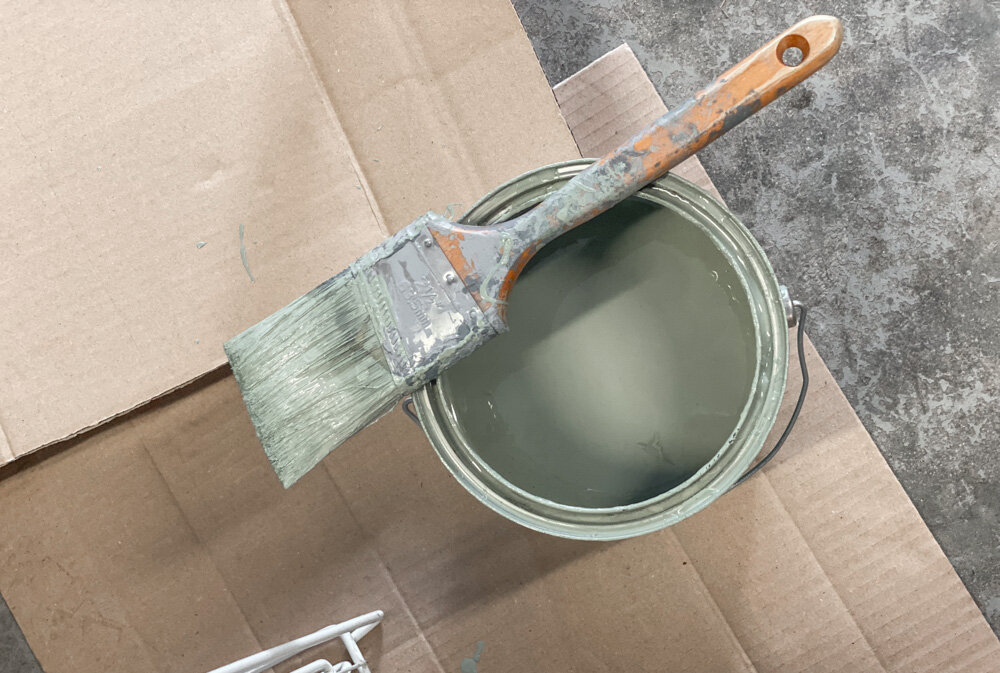
Our modifications were minimal but impactful:
Shelving
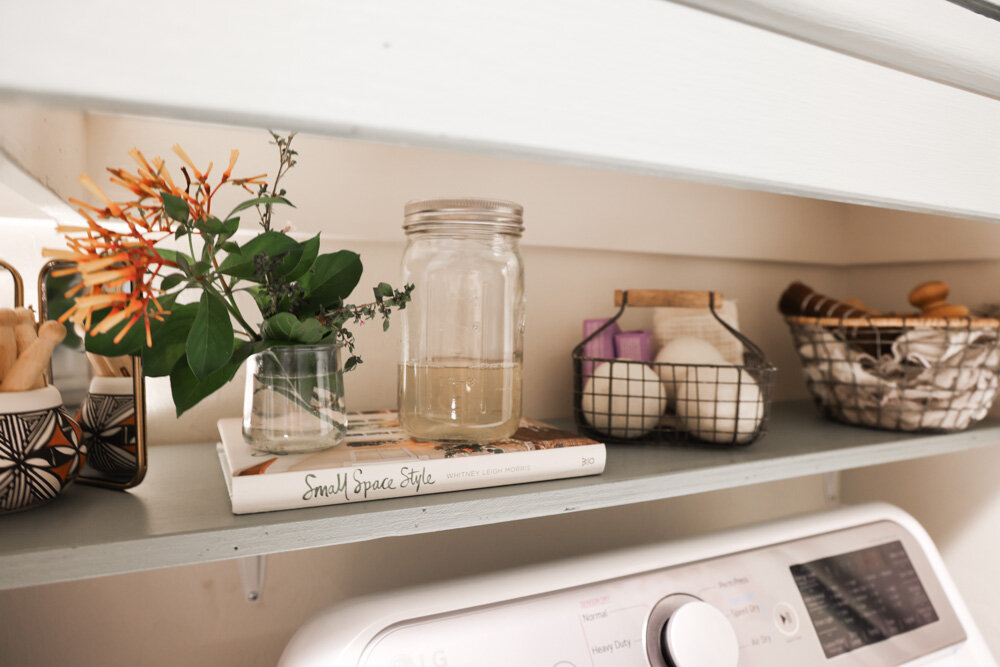
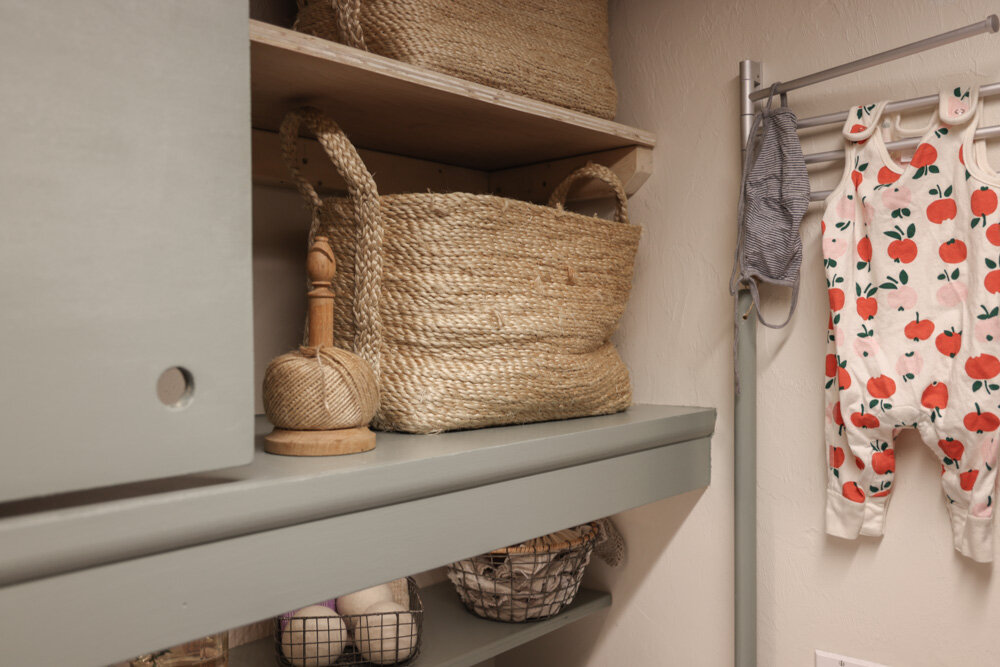
A touch of open shelving in this area is nice for quickly tipping items like masks, leashes and cleaning supplies out of overloaded hands. But having ONLY open storage is what was causing the most visual clutter. So I opted to custom-cut and install simple sliding doors to conceal the contents of the existing shelf, which we divided into 2 levels to maximize vertical space. We also added a new, low profile shelf slightly above the washer and dryer for smaller goods.

Doors
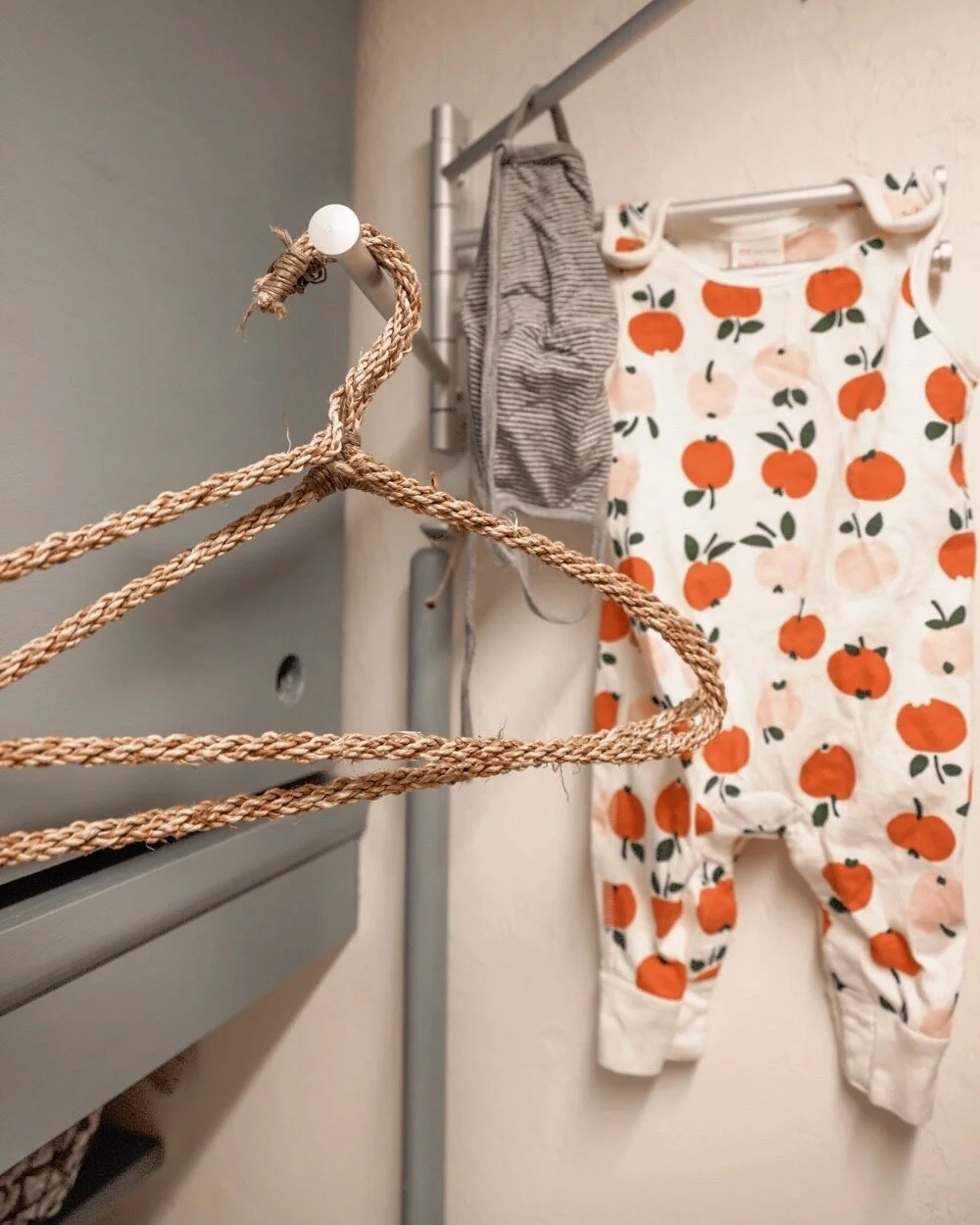
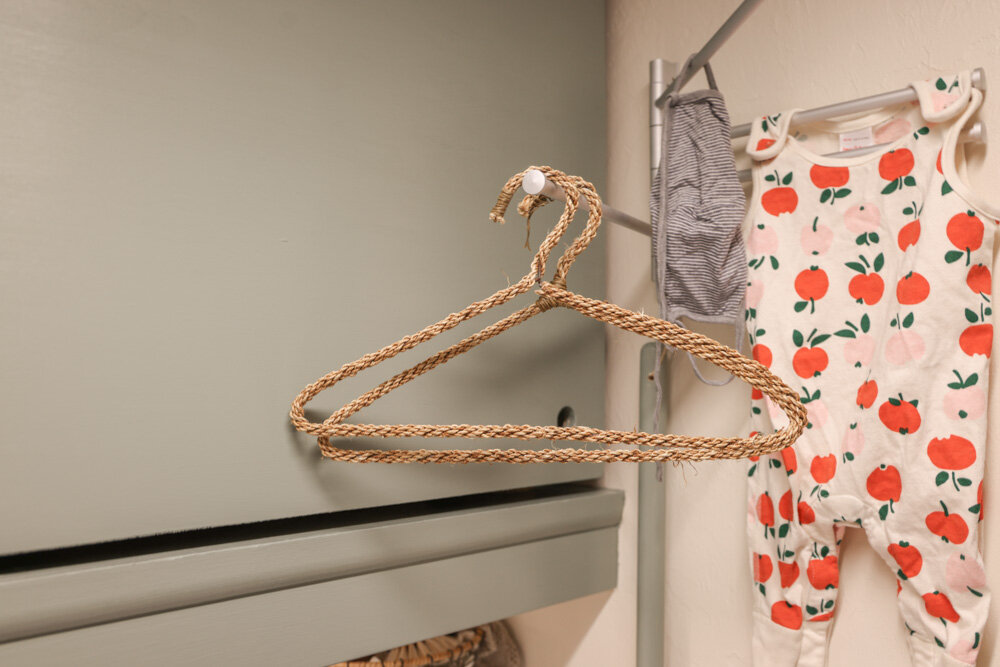
The sliding doors were a space-saving choice, as cabinets would’ve encroached into headspace when opened. We also opted to forgo handles on the doors to further save every bit of space, since the sliding panels overlap and are situated close to the collapsible, swing-arm drying racks I installed in place of the bulky overhead closet-style dowel.
Paint
I used the paint leftover from West’s reading nook makeover (color: Sherwin-Williams Evergreen Fog SW9130) for the doors and shelves. It’s an easy-going, green-grey hue that adds a pop of personality without overcrowding a tight, windowless space such as this one. (Eventually we’ll do an additional coat and paint the interior shelf, as well as touch up the walls nearby, but one thing at a time.)
Cleaning Supplies
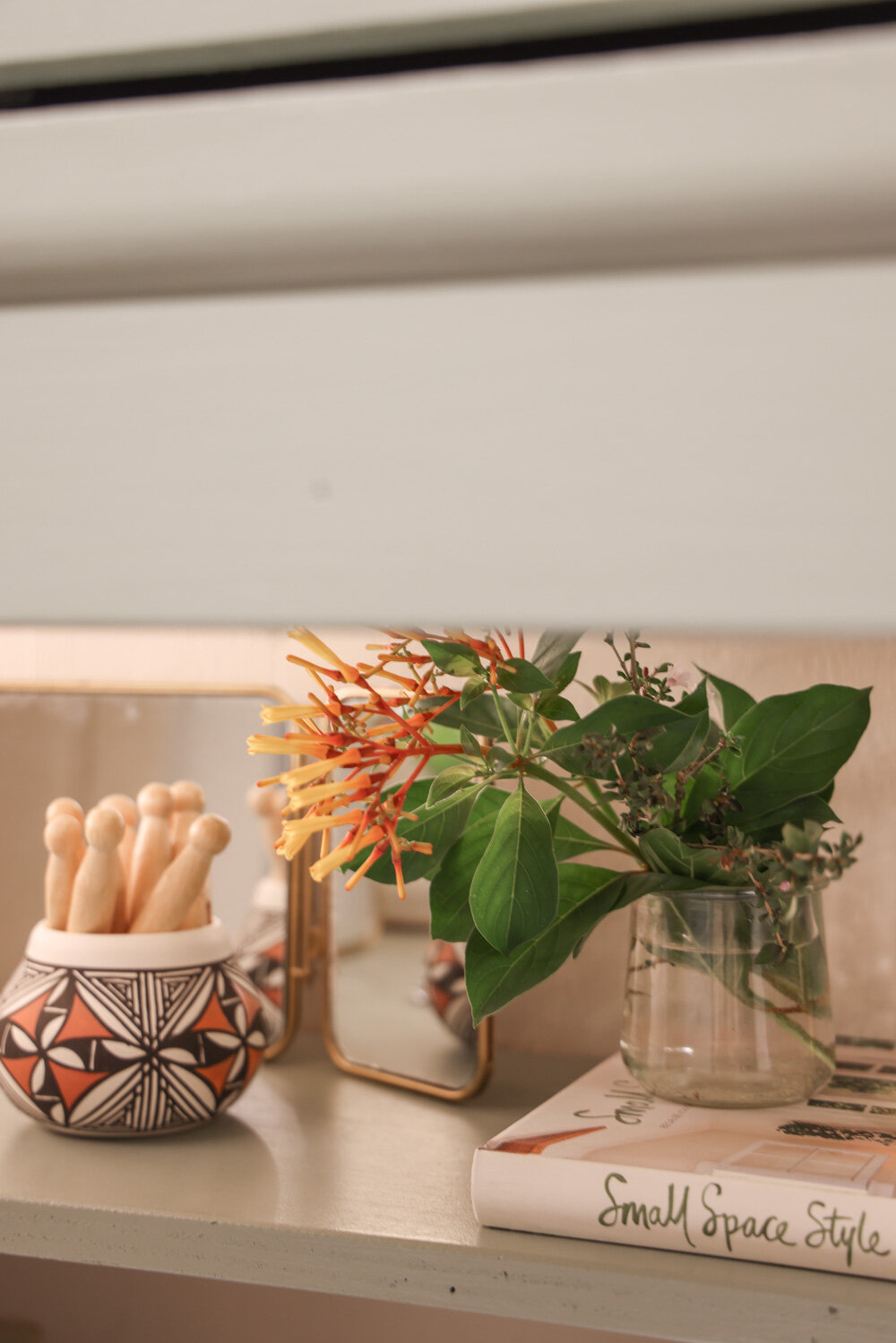
Over time, as my folks used up their existing supplies, I replaced their disposable dryer sheets with reusable wool dryer balls, their plastic jugs of detergent with refillable glass jars accepted by the local refill station (Life Unplastic), their numerous household cleaning liquids with a bottle of concentrate and refillable spray bottles, and their paper towels with washable cotton rags. Not only do reusable / refillable goods reduce waste and save money over time, but they also free up a remarkable amount of space. Plus they look far nicer in my opinion.


So, while it’s not perfect, it’s loads better. We can now leave the interior door open without wincing when we walk by or pass through. Remember: you don’t necessarily need more space or clever storage solutions. You just need to get a bit creative with the space you’ve got.

Our Tiny (~114 sqft) Greenhouse
Constructing a tiny, multi-purpose greenhouse.
The tiny greenhouse is up, folks!
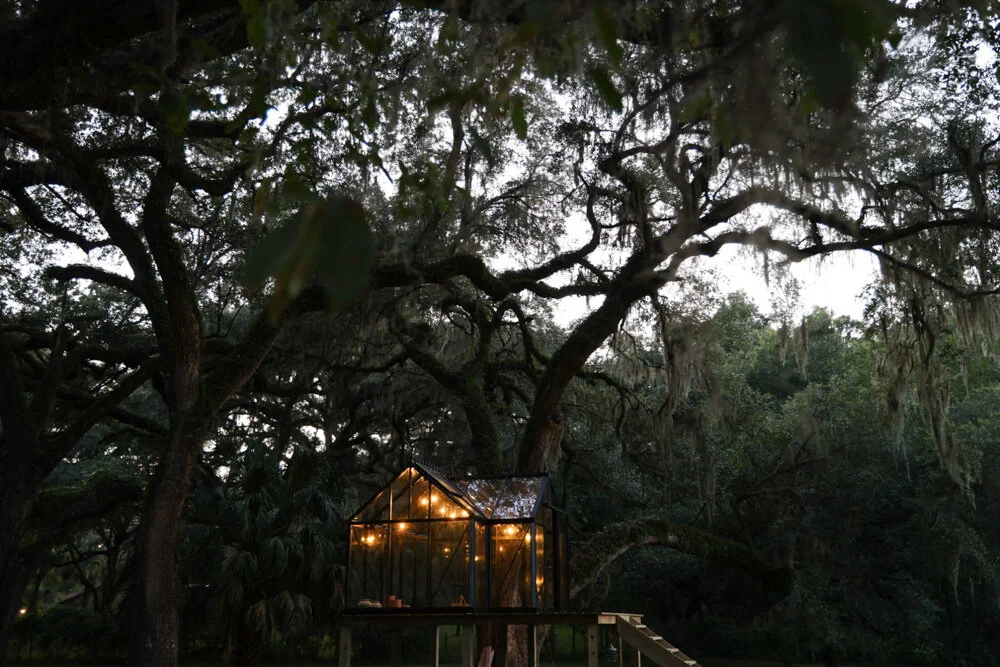
It is a ~114 sqft, T-shaped design that straddles the sunny field of the prairie and the cool canopy of the oak trees. It’s still a work in progress as far as finishing touches and styling are concerned, but that’s the easy part!
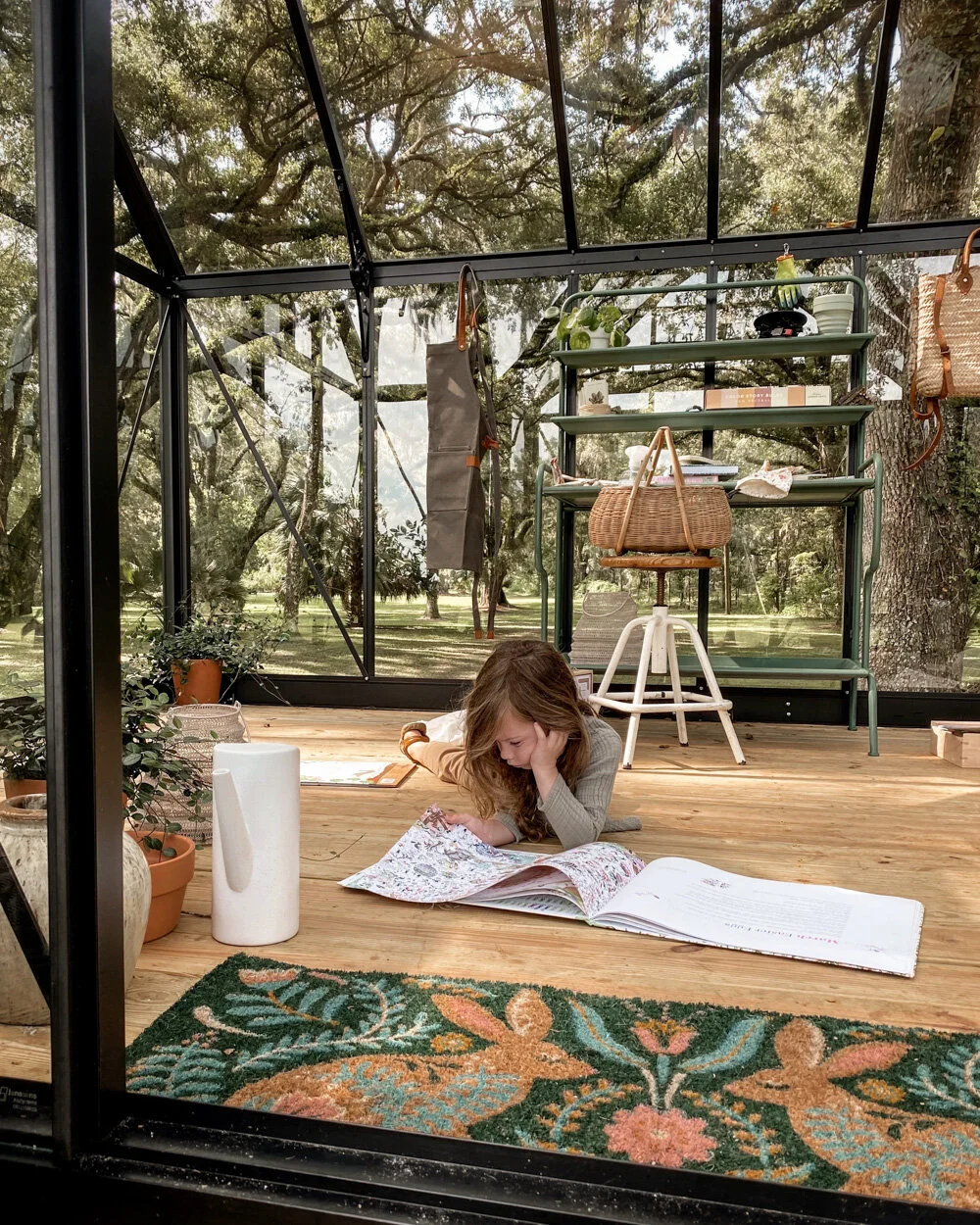
We started this project back in the spring, but first had to navigate the permitting process since we’re in a flood zone here in the Southeast. Turns out that we had to lift the structure 5’ off the ground to satisfy requirements, so now it’s got a treehouse vibe to it.

If we could’ve build it on the ground, I would’ve done so on top of a low, 2-3’ brick or stone perimeter wall to create more height and to mix-and-match textures and materials. Still, I’m so happy with how it turned out!

Since we’re in a high wind zone here in Florida, where there are product approvals to pass before building anything new, we couldn’t construct a structure of recycled/repurposed windows and materials. So instead, we found this sweet little aluminum + tempered glass greenhouse kit from The Home Depot.
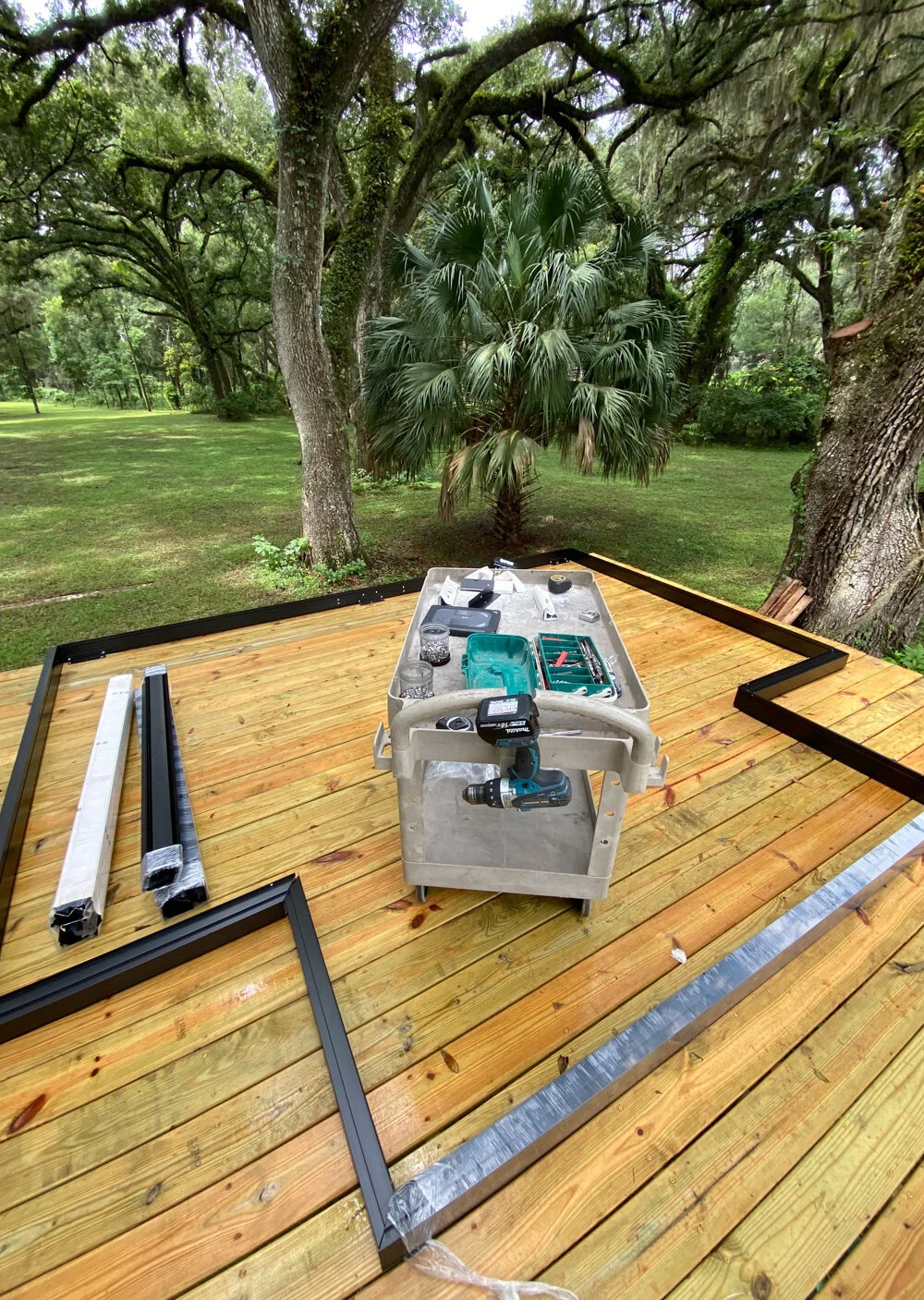
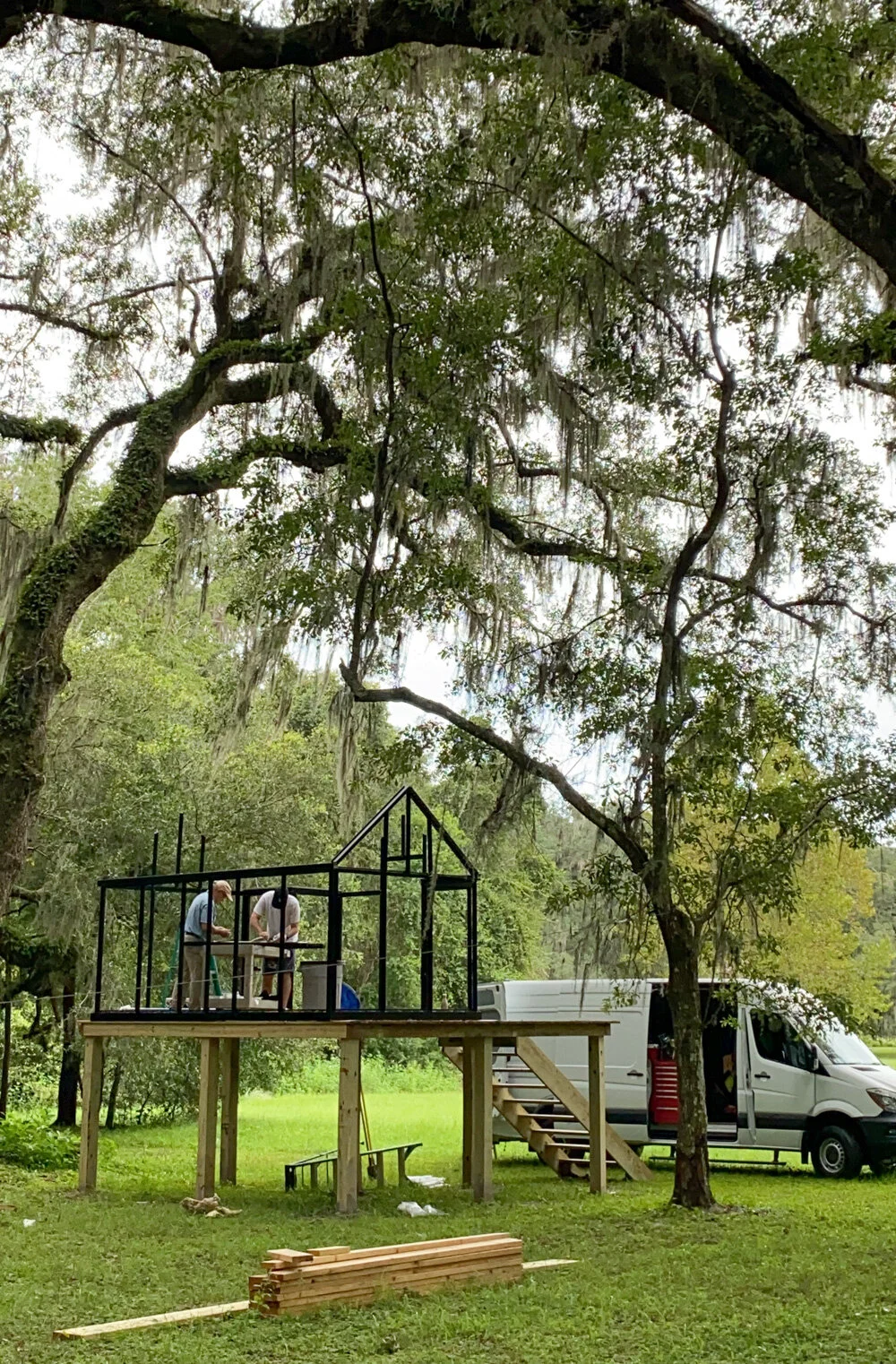
What drew us to this partial model was its unique shape and compact but easily navigable size. Despite its small footprint, it has an overall height of 8’2” so our family can sill move comfortably around the interior. (I’m almost 6’ tall, and Adam and my father are even taller.)
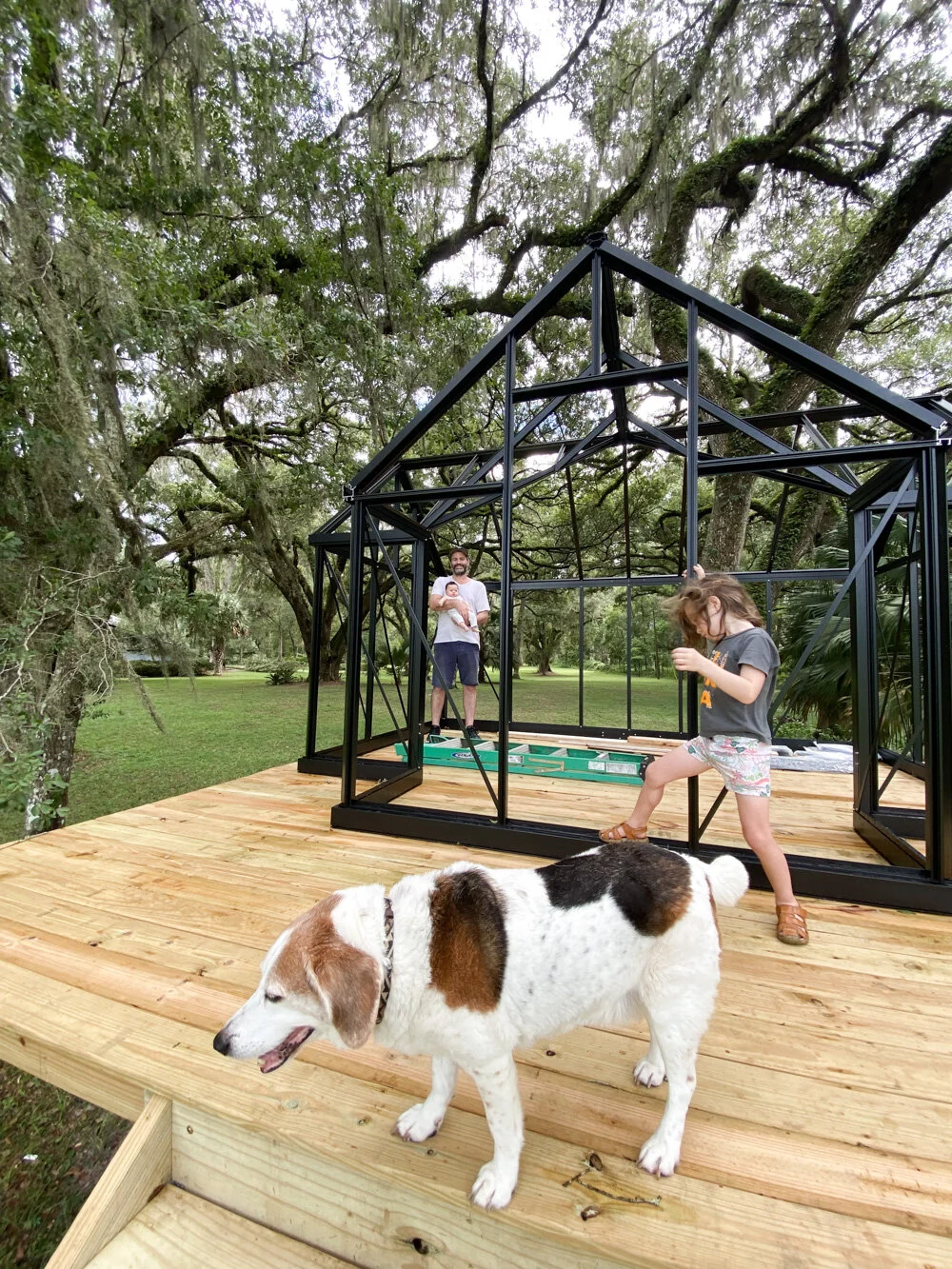
The framework base can anchor to bare level ground, a concrete slab, or a wood platform like the one we had to create. We used pressure-treated lumber from The Home Depot to make the 14’ x 14’ deck, and placed the greenhouse towards the back of the surface so that the extra square footage extends beyond the front of the greenhouse like a miniature — but very usable! — stoop.
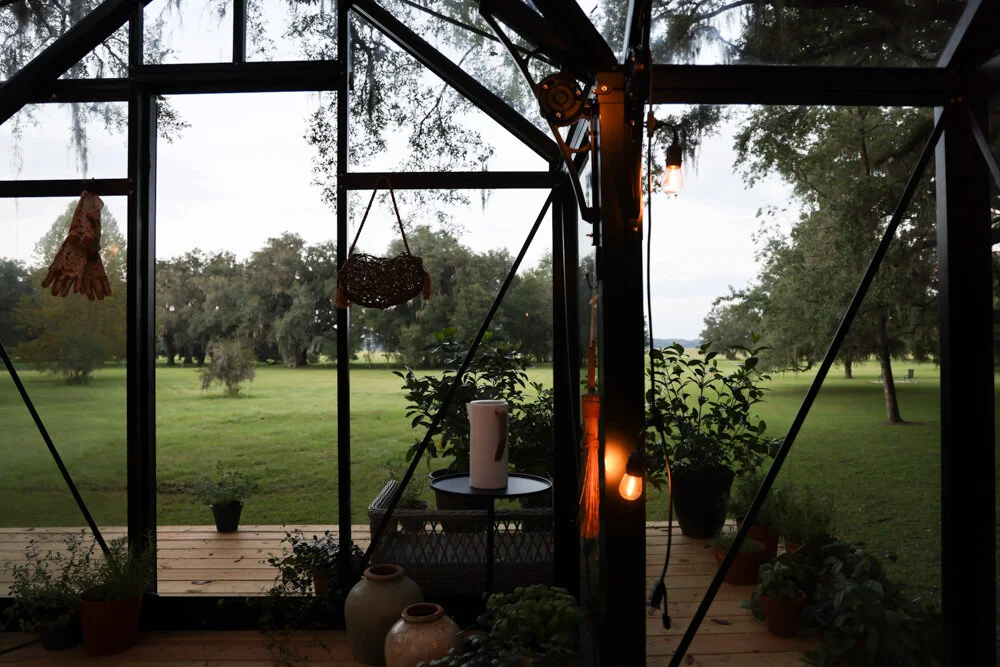
It took about a one week for two people (our friend Alan and my husband + business partner, Adam) to construct the unit. Alan studied the instructions in advance, and came prepared with all the necessary tools and back-up materials, just in case. It would’ve all been completed sooner had they not stopped repeatedly for the summer rains. Uninterrupted, I estimate that it would’ve taken 3-4 days of work for the two of them.
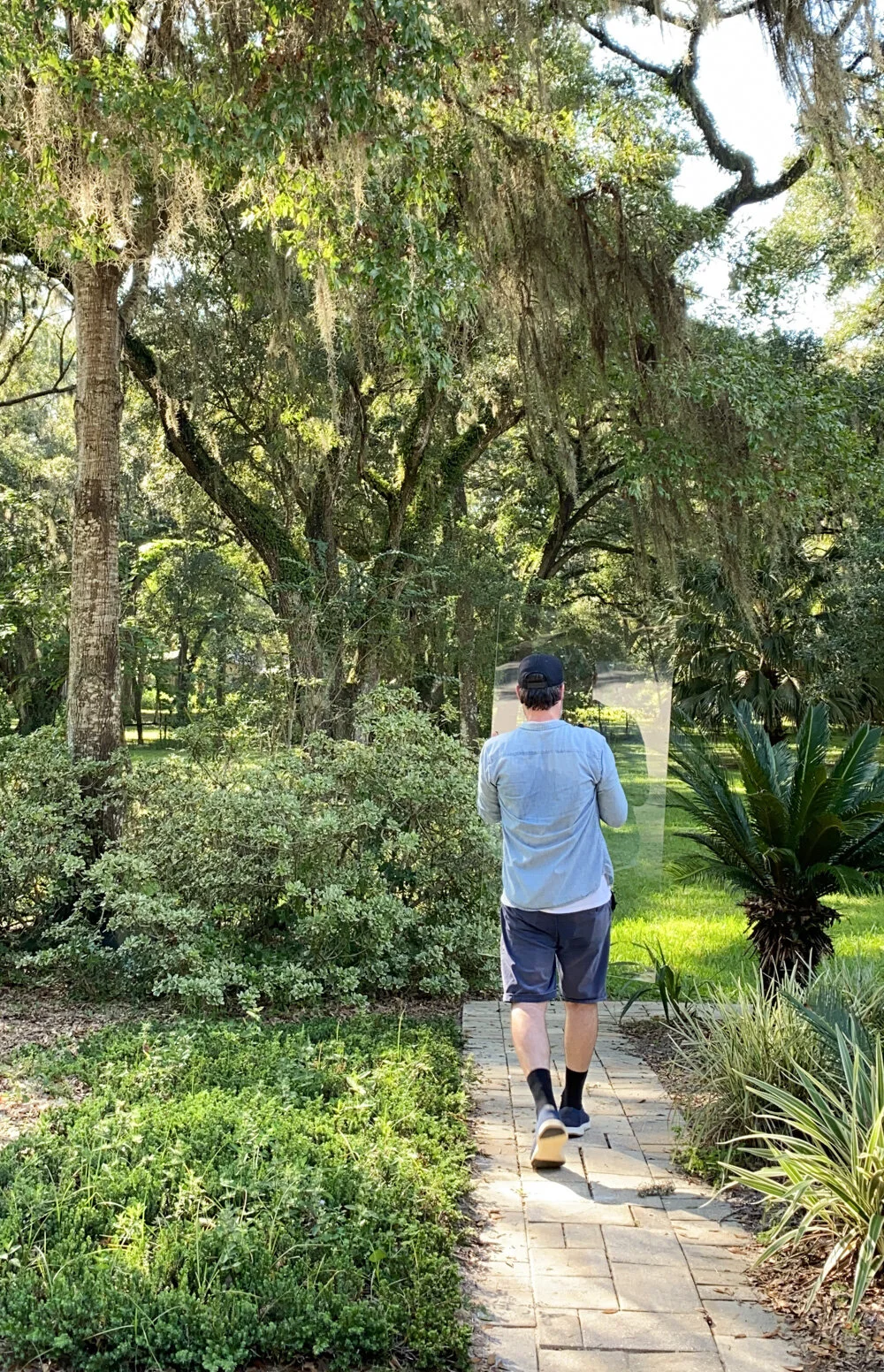
Now that it’s all up, we’re debating— deck paint? Slip-proof tile? Both, I think! And of course we need to add some railings.
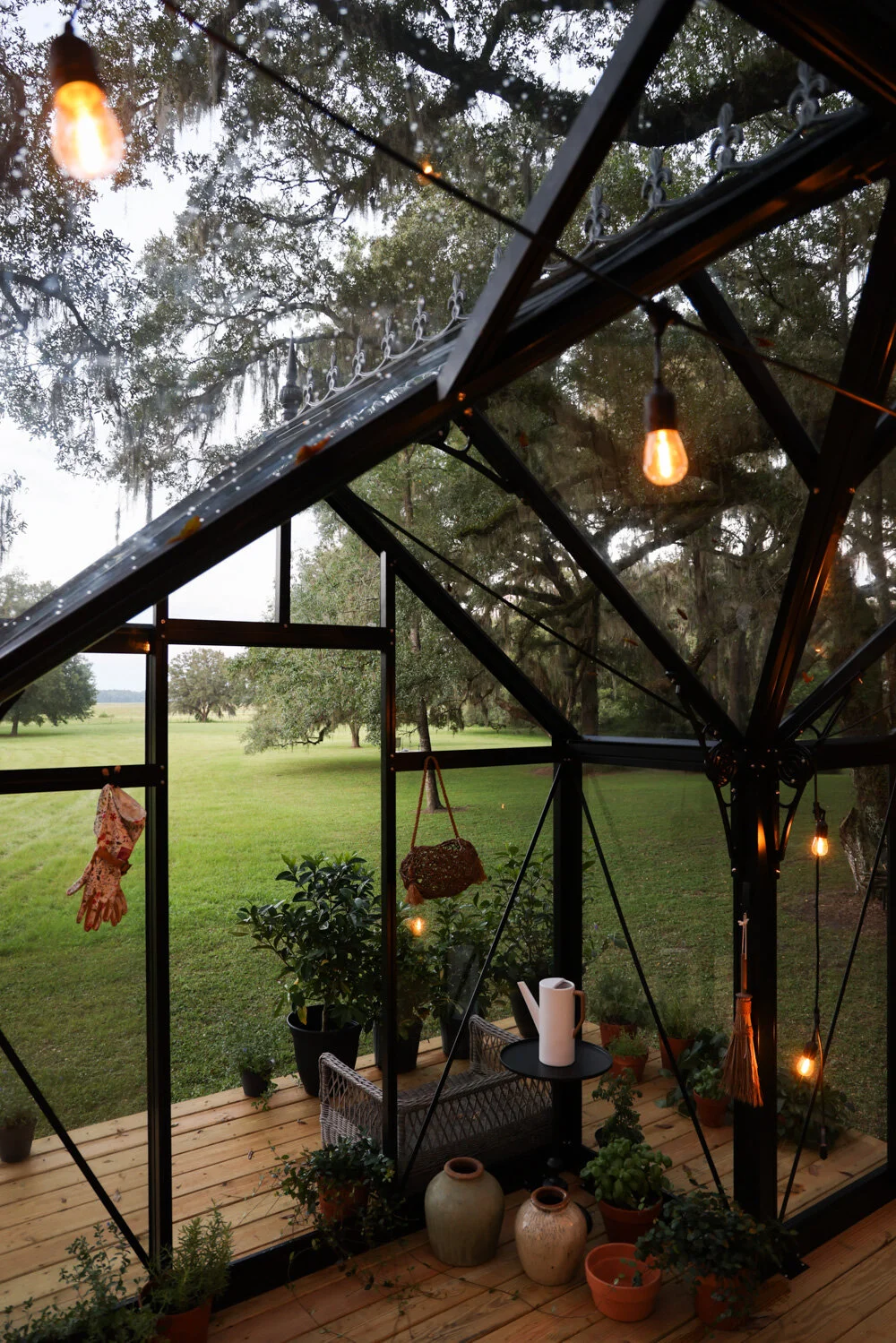
In the meantime, we’ll be outfitting this gem with flexible zones for potting + growing and lounging, and we fully intend to enjoy it as much in the fall and winter as we undoubtedly will when spring rolls around again.
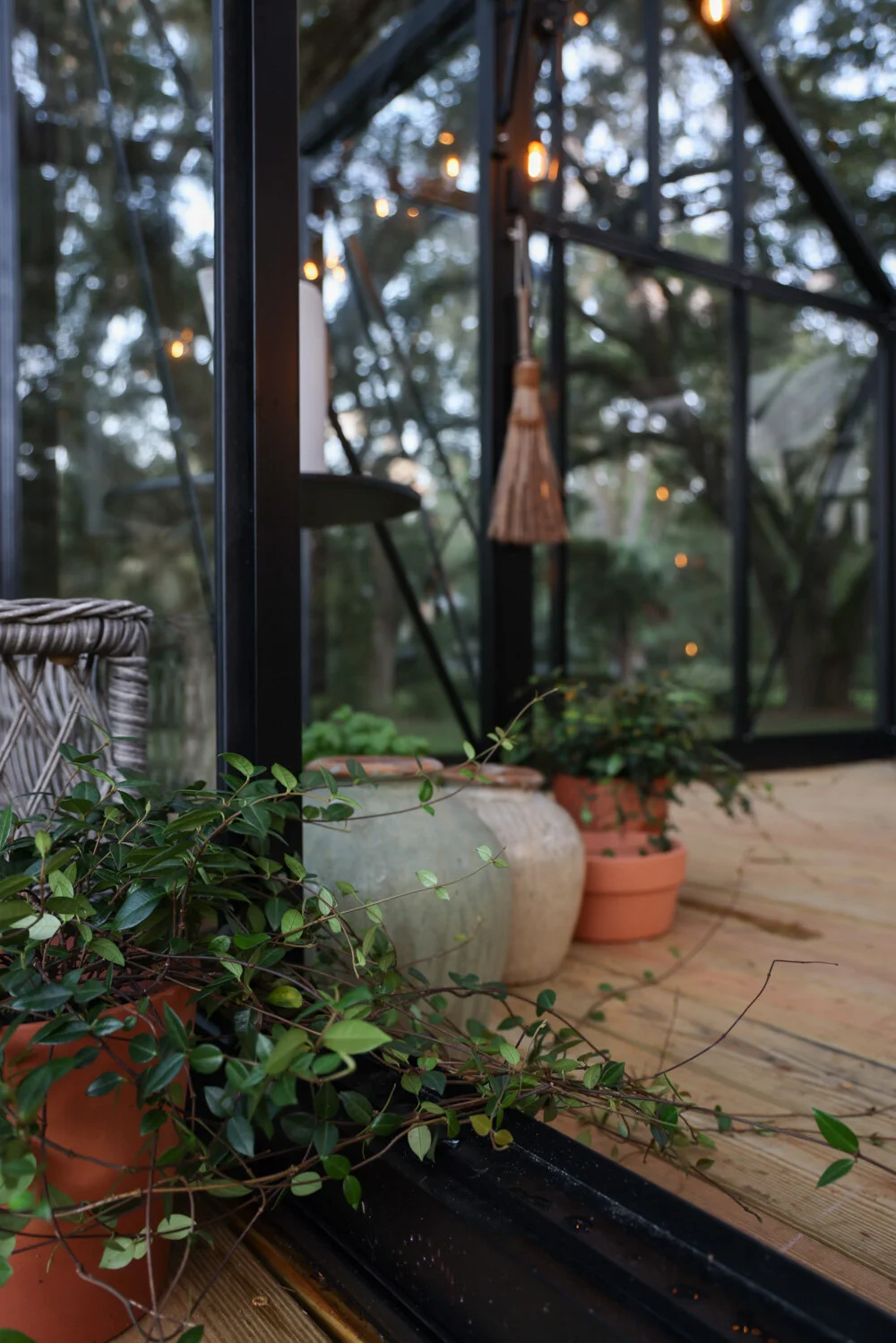
Since the greenhouse has a sliding front door and 2 roof windows for ventilation, it’s actually quite a comfortable temperature inside — especially with a fan oscillating. This is welcome news for us, since we intend to use the space like a conservatory or sunroom, more so than strictly a greenhouse for plants.
I’m sure some readers will be concerned about the possibility of bird strikes, so I want to address that topic in this post as well. Prior to constructing the greenhouse, we spoke with a neighbor in the community about their experience with strikes on their greenhouse. They’d not yet experienced any, but we went ahead and purchased some decals on Etsy anyway, just in case. Thankfully this small house has several aluminum beams in addition to our furnishings and accessories to visually break up the glass. In the three weeks it’s been up we’ve had no incidents, but we’ll remain on alert. (As a family of vegetarians with three rescue pups, we take animal safety seriously.)
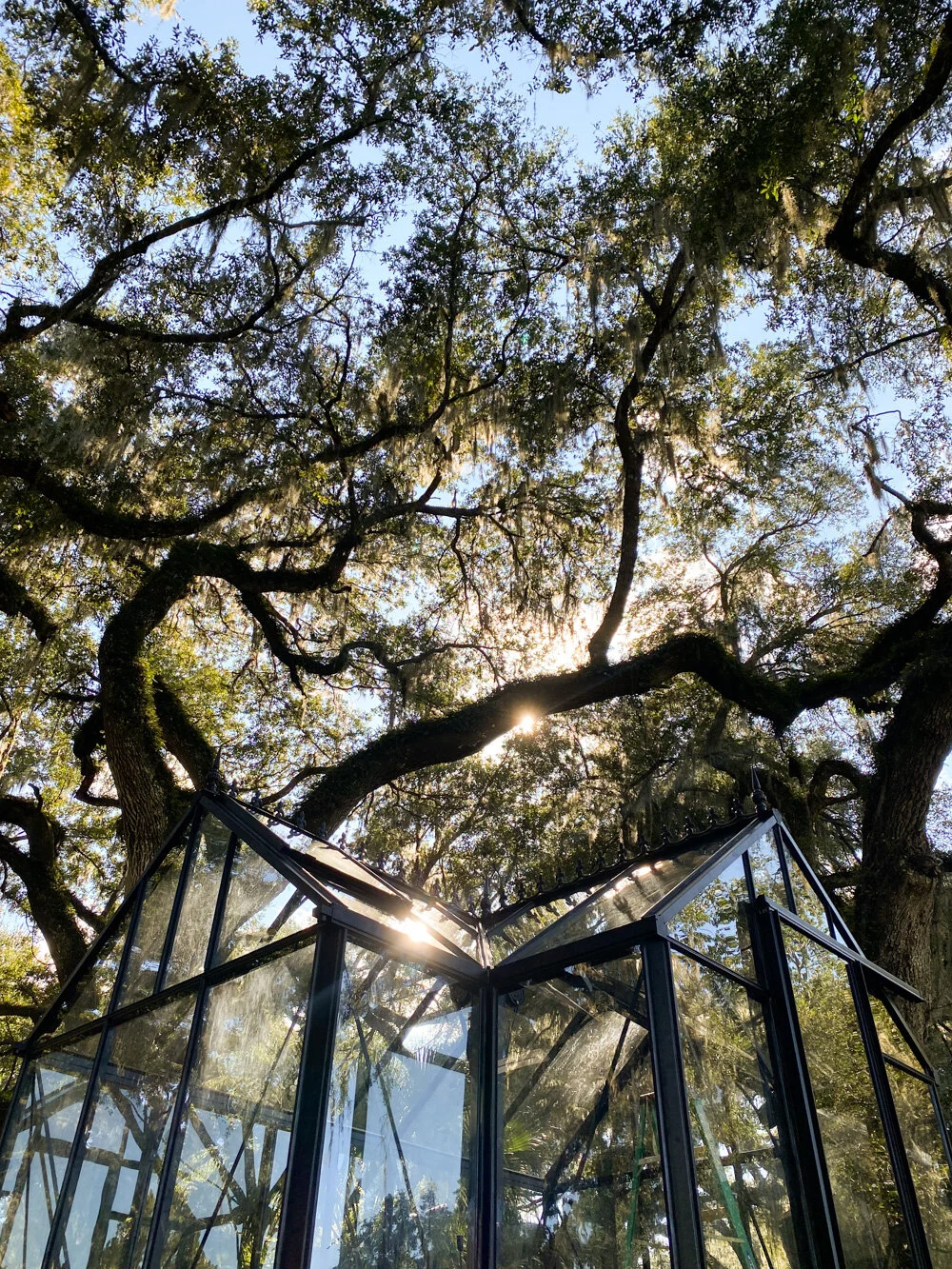
There will be many more posts featuring this beautiful little greenhouse to come. We’re thrilled with how it turned out, and I look forward to sharing more small space living stories from it with you.
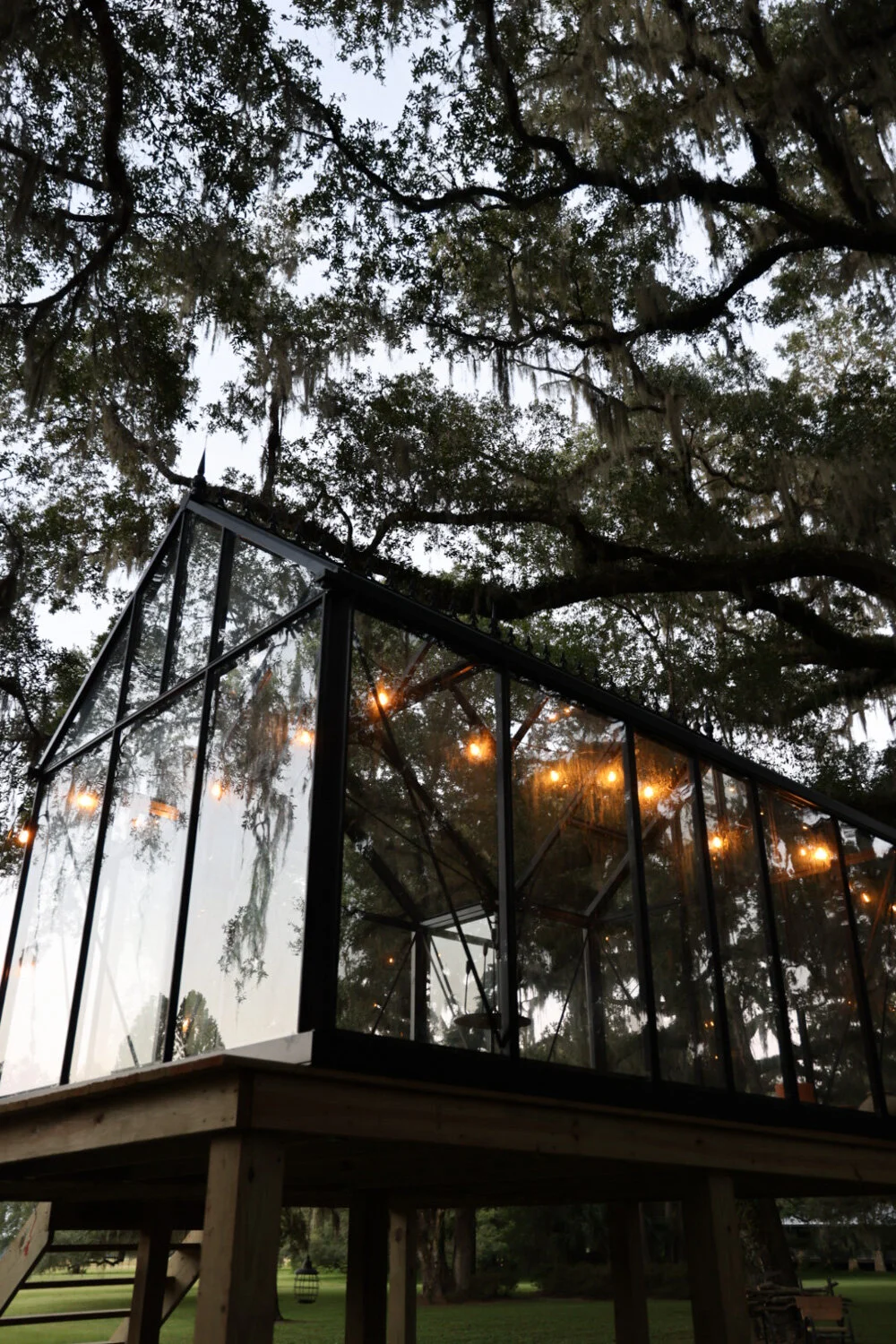
I want to thank The Home Depot for working with us on this project. They’ve always been so supportive of our small business’ funny little ideas— from our tiny closet nursery at the cottage, to our galley kitchen’s more energy-efficient renovation, to our outdoor shower and mini thoroughfare garden makeover in Venice.
Note: This post features gifted product from The Home Depot. Our small business appreciates that The Home Depot has, for years, tangibly supported designers, bloggers and creators of color and from the LGBTQ community.

Creating a Closet Reading Nook for a Child
View the corresponding video for this post via Pinterest, here.
As we closet out the summer and welcome the fall, we’re still somewhat in a place of limbo as far as our home life is concerned. Our shared farmhouse in France is undergoing fundamental repairs (which we knew would be required going into the acquisition), and our small shared cottage in the Southeast has just been permitted for construction. As such, when in the USA, we’re in a temporary space. While we are comfortable, we still feel adrift, which has been a challenge for everyone, including our four year old.

Starting with our uprooting from Venice, and continuing on to our move across the country (and across the Atlantic, to a certain extent), and the arrival of baby Léa, our pathway through 2021 has been a serpentine one.

To give our pre-schooler a solid little place to catch his breath and call his own as we work on our long-term home projects, we transformed a walk-in closet into a quiet little reading nook. Here, he can escape the barking dogs, the crying baby, and his frenzied parents when need be.
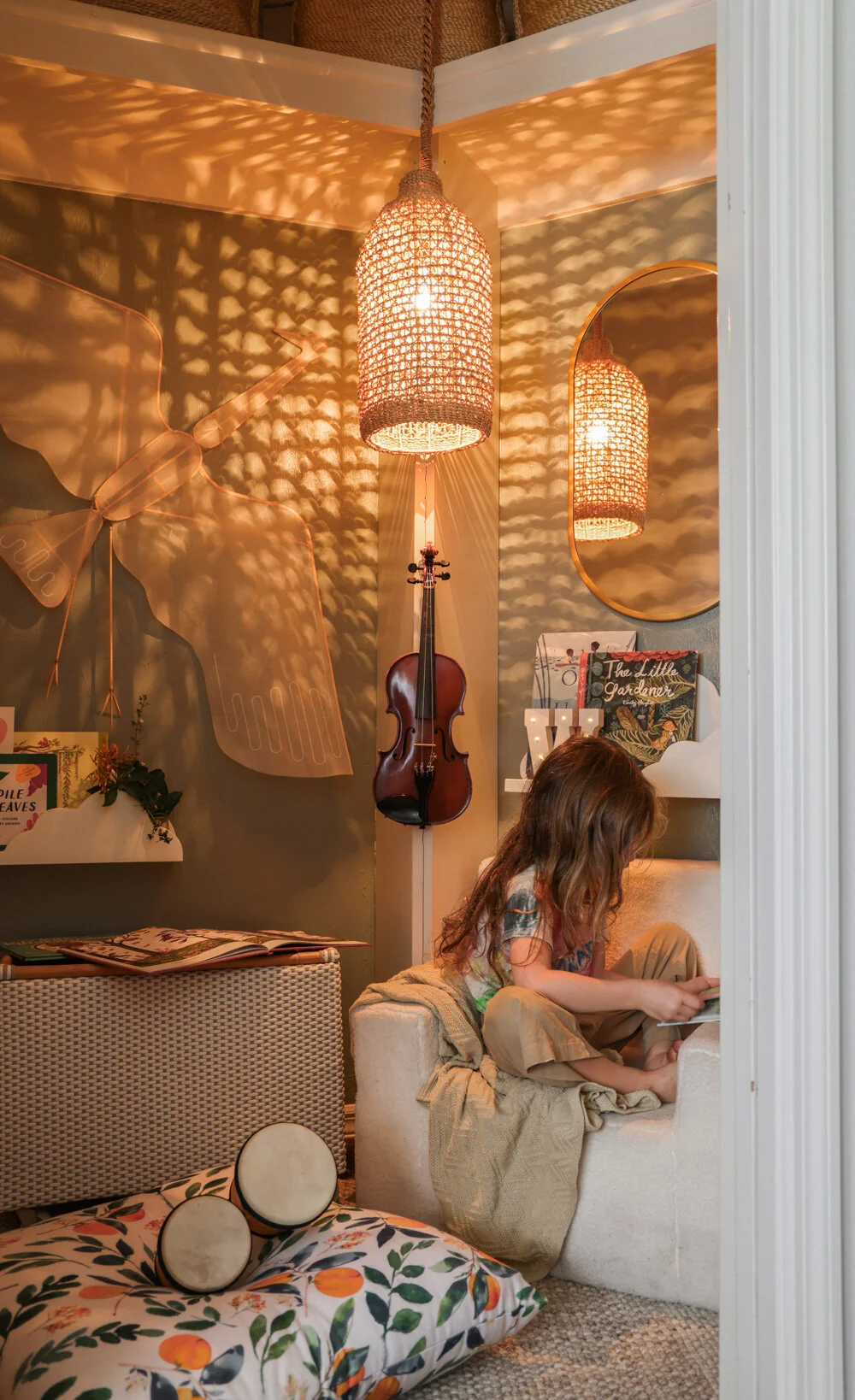
We decided to simply work with the existing space, using various items left over from various partnerships and our cottage. This helped us keep the budget, waste and overall lift minimal.
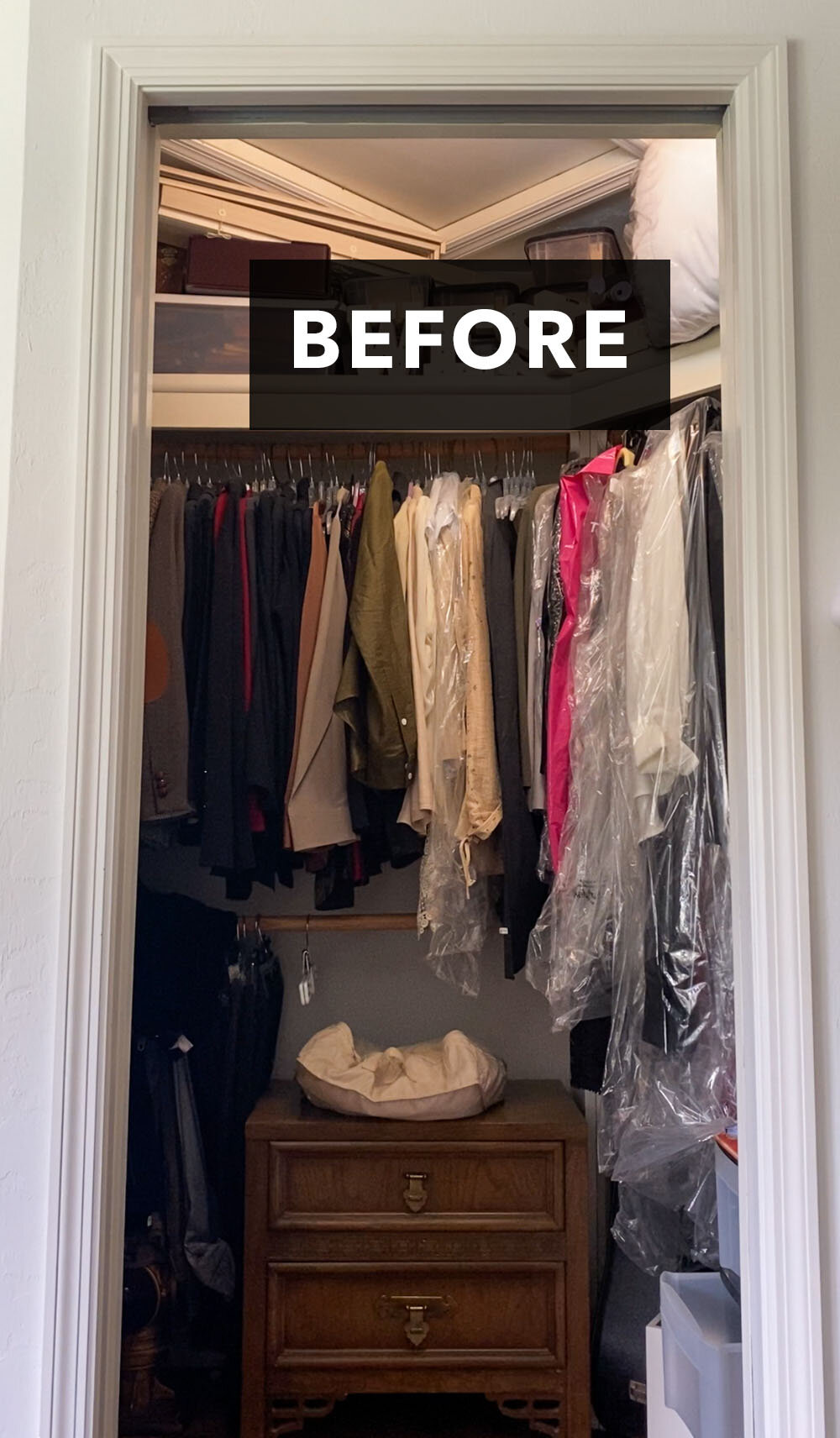
After temporarily relocating most of the closet’s clothes (which belong to other family members, as this is also a shared space), we confirmed that the walk-in was indeed quite roomy and usable for our little one.

All that was needed was a fresh coat of paint to match tones from the bedroom while adding a pop of color. We chose Evergreen Fog (SW 9130) by Sherwin-Williams, as it’s a subdued but striking green-grey blend that’s full of soothing character. Our son participated enthusiastically in the painting process, which hopefully provides him with even more of a sense of connection with the space.

With the help of floating shelves, a pendant lamp, a child’s reading chair, and a stack of library books, West now has his own escape pod. Naturally, he often finds Sophee in there waiting for him, but what else would you expect from our sweet beagle menace?

Thank you to Sherwin-Williams for providing the lovely paint used for this quick and playful small space makeover.

Leaving the Farmhouse (for Now)
While my family was at our Farmhouse for the first time, a good friend of mine sent me a voice memo saying I looked like, “a woman in love.” She was right. The feeling I experience while in our new-to-us house is the sort of feeling I’ve only experienced while living in Venice. It’s the feeling of loving a physical place as completely as I love a person. It’s the feeling of home.
You can imagine how reluctant I was to leave. For the second time in a year, Adam and I closed and locked the front door of a (tiny) home we love, and begrudgingly left. But, unlike the cottage, we’ll return to the farmhouse one day soon.

The bright side of this is, of course, being reunited with our four-legged family members. I refuse to be separated from StanLee (our senior beagle-mix) for too long. When I first adopted him 13+ years ago I was working in France from 2-4 months per year. Eventually I just couldn’t stand being away from him, so I stopped going.
Adam and I would’ve loved to take the pups with us on this first visit to the farmhouse, but there was no way I was putting them through the trauma and risks of air travel for a one month stay… especially after driving them across the entire US earlier this year.

So, as planned, we’re back on the east coast for the time being.
Why so short a trip, rather than a forever move?
Well, lots of reasons. All of which we knew in advance.
The point of this first stay was not to relocate completely, but to instead meet with local contractors, establish plans for the first round of restoration work, get a better understanding of the land and structures since we’d purchased it all sight-unseen, and to make sure we hadn’t dreamt the whole place up to begin with.
The most pressing issue is that the farmhouse roof and ceilings are in desperate need of major repair— an issue of which we were aware going into the acquisition. There is some water damage that compromises the integrity of the building, while likely being unsafe for the little ones and their developing respiratory systems. Despite the fact that the house looks fairly large in photos due to the outbuildings, the residence is under 800 sqft, so there can be no relocating to one room or another while the restoration is underway. Instead, the entire home will be unlivable throughout the duration of the roofing project.

While this major, urgent work is being conducted (and shared with us in realtime via WhatsApp… so we can share it with you too!), we’ll be focusing on our tiny cottage build and newly completed greenhouse in the southeast. The prairie cottage is slated to be built this the fall. I’ll share the entire process here, and I’ll continue to post images and updates from the farmhouse.
Our trip to France was also brief due to medical considerations. Upon our return, I had a simple surgery from which I’m currently healing. Plus, my parents and Adam’s folks all have various health-related issues to handle, and we intend to be here in case anyone needs our help. And, of course, Léa’s doctors are keeping track of her growth and development after her IUGR. (So far so good, thankfully.)
As I’ve expressed before, the farmhouse is a forever home for us. We’ll be there again soon when the timing is even better.

Women Supporting Women
Here’s to women supporting women. Because when systems fail us, we must stand up for one another.
I want to say a heartfelt Thank You to Vintner’s Daughter (and its founder, April,) for showing up for the youth at The RightWay Foundation, year after year.

60% of sex trafficking victims nationally are from foster care. The RightWay Foundation exists to prevent foster youth who are aging out of the system from falling into situations such as this, as well as homelessness and incarceration. This marvelous nonprofit works towards setting their youth up with safer living conditions, access to in-house mental health, job preparedness training, and a 24/7 understanding community equipped with trauma-informed training.
Thank you, April and the Vintner’s Daughter team, for supporting all the youth at RightWay— the women and their children in particular.
Pictured: The Travel Set. Compact sizes of Vintner’s Daughter’s award-winning ACTIVE TREATMENT ESSENCE™ + ACTIVE BOTANICAL SERUM™ duo, available for the first time as a complete set.

Vintner’s Daughter social & environmental responsibility details:
2% for Women & Children
Women Owned Business
Climate Neutral
Plant Based
Cruelty-Free
Vegan
Sustainable & FSC-Certified Packaging
California Green Business Certified
Clean + Slow Beauty
Consciously & Responsibly Sourced

Buying a Property Abroad: Finding the House, a Realtor & a Notaire
How we found our French Farmhouse as Americans

For years I’ve known the exact place in France in which I wanted to live. As such, I simply ran web searches for homes and land for sale within a given set of miles surrounding that town. I searched patiently for about two years before taking action.
In addition to seeking listings online, I also connected with the local Mairie (mayor’s office) to inquire about lots that might be introduced to the market in the near future, and/or properties that were still unlisted.
To read the full-length version of this piece and view all the photos, please consider becoming a subscriber to my Rightsizing newsletter. Subscribing is like walking into our cottage or farmhouse, but without getting all the dog hair stuck to your clothes! Paying subscribers will receive my newsletter, and full length versions of posts from this (now abbreviated) blog, along with exclusive imagery. We’ll nurture a community of folks who are interested in multigenerational living, co-stewardship, and life in — and with — a smaller footprint.

A Summer in Limbo
There’s been a great deal happening over here as far as our home and family journeys are concerned, but our months are still being spent in an odd sort of limbo.

Above: Dress from Carolina K, whose Zero Waste Collection can be found here.
We’re currently in the process of packing for our first trip to the tiny French Farmhouse. Meanwhile, we’re also preparing for the greenhouse to be constructed here in Northern Florida, and we’re progressing through the permitting process for our small prairie cottage / ADU, which is slated to be finished before the end of the year.
While our family is extremely eager to return to small space living (and documenting our experiences), things like this take time. This is something that’s easy to forget in the age of instant gratification and the glossy home transformations we see on social media and on TV.
During this interim period, we’ve learned so much about the value of multigenerational living.

Despite some work-related inconveniences, I’ve actually really appreciated this transitional situation of ours during my 4th trimester.

As we spend this warm summer managing the realities of life and our ongoing projects, we’ve been sticking to the most simple of activities.

Rather than planning camping trips, weekend getaways and engaging in elaborate games or excursions with our four year old and newborn, we’ve stayed home and outdoors as much as possible.

Playing backyard bingo, filling and refilling a little nature museum box, and watching shows with our portable projector are activities that have provided us with new outdoor experiences every day, without the need to commit to anything that we just cannot add to our juggling routine at this time.

When I overwhelmed by the to-do list and frustrated by the slow progress of our home journey and feel as though too little has been accomplished, I focus instead on the fact that our tiny hummingbird has almost tripled her birthweight in this time. I remind myself that I’ve had the immense privilege of being with her for every nap. Every smile. Every bedtime and wake up. Almost every single feeding. And, recently, her first giggle!

We will eventually have our hands filled with our little home & business. For now, our hands are blissfully filled with this growing miracle.

Above: Jamie Haller Shoes

My Top Small Space Hack
Recently I’ve needed to remind myself of my number one small space hack: STOP ACQUIRING SO MUCH STUFF.

Above: Wearing a “Farm-to-Closet” dress, made with regeneratively grown cotton, from Christy Dawn.
At the end of the day, it’s not actually about nifty organizers and design tricks. It’s about discovering what you need — and don’t need — in order to live comfortably and happily, day by day.

A side perk of travel (even a short overnight trip) is that it can present an opportunity to reevaluate your belongings and true necessities.

• What items in your home can serve multiple purposes, eliminating the allure of obtaining more?
• What nonessentials require all sorts of finite resources to manufacture, acquire, maintain and store… then drain time, money and materials that should be protected or put to better use another way?
As we prepare to experience our tiny farmhouse for the first time, I’ll be keeping these topics at the top of mind. And, in the meantime, I’ll be reading The Afrominimalist’s Guide to Living with Less by Christine Platt.


Replace 300+ Plastic Bottles with This
This post was sponsored by simplehuman.
My sister and her family are visiting the prairie for the first time in a year and a half. As we’ve not yet even broken ground on our small ADU (sigh), I can’t personally host them as I once used to at the Cottage. Thankfully, our wonderful neighbors down the dirt road have a lovely little studio apartment that they generously offered up for our four visitors.

In preparing the space for their arrival, the neighbors and I did the usual: converted the sofas to beds for the two young kids, prepped the space with plenty of matches and flashlights (the storms here are ferocious and often knock out the power), and stock the fridge with essentials. I also like to provide sleep masks and earplugs for folks staying in a small space like this who might not be used to such a format. After all, when one person wakes up, EVERYONE wakes up unless you’re practiced or prepared.

There were also some unique considerations we took into account when setting up the space to reflect the realities of air travel during this time as it pertains to safety and wellness.
First, with the help of an old, 2-tiered metal plant stand, we created a makeshift mini drop zone outside the front door, perfect for temporarily corralling packages, bags, masks, and shoes.
Secondly, we added a stainless steel hand soap pump to the narrow kitchen for frequent hand washing.

While bar soap is one of the easiest low waste alternatives to disposable plastic soap dispensers, one of my sister’s kids, along with my 4 year old, both act as though it’s their duty to destroy each and every bar with their mischievous little fingers as quickly as humanly possible.

Does anyone else have a kid who does this!?!
By contrast, this pulse pump by simplehuman is made to last. It refills neatly with an integrated funnel opening, is made for one-handed dispensing, and is tested to withstand 15 pumps per day for 27 years. (That’s over 300 plastic pump bottles.)

What sets it apart from other reusable pumps is that the spout is drip-free, clog-free, and made with a coating that resists germs and fingerprints. Additionally, it’s engineered with a mechanism that’s low friction, which not only makes it easy to use, but also puts substantially less strain on the pieces that typically break down over shorter spans of time in most reusable pumps.

When added to the studio along with items like a compost caddy, washable towels in lieu of paper alternatives, a charcoal water filter, and refillable toiletries instead of travel-sized bottles (which are so small that they’re usually skipped over for recycling), we’ve got a functioning, lower waste small space for their visit.

And, for better or worse, the kids will have to find something else to destroy…


Thoughts on Sustainability x Home Design
In reading decor and design trend predictions for post-pandemic life, I noticed that the topic of sustainability is only touched upon in the context of product sourcing.
The articles reference buying responsibly-crafted materials and furnishings, but rarely do they delve into the wider picture of what consumer trends (like having several walk-in pantries to contain an overflow of small appliances and plastic organizers, or having a dedicated entertainment room AND a dedicated gym AND a bedroom-sized closet) mean in terms of larger global impact.

As we await the permitting of our small ADU cottage on the prairie, I’ve been thinking a lot about this.
(For folks inquiring about when we’ll post a home tour: well, we’ll post one when we have an actual house. And, hopefully, we’ll get to the French Farmhouse soon, and I’ll share plenty from there as well.)
Some of the materials and concepts we’re putting into play in the cottage were chosen with sustainability at heart, while other decisions were made almost entirely with logistics, climate and constraints at the top of mind, at the seasoned recommendation of the GC. I’ll go into much greater detail and cover the process step-by-step once the construction begins, as I prefer to have more evolved visuals to accompany my words. But my hope is that the scale of our project is so small that any imperfect impact is minimal.

Our family is very, very eager to return to small space living (and documenting our experiences), but things like this take time, which is something that’s easy to forget in the age of instant gratification and the glossy home transformations we see on social media and on TV. Plus it’s simply a great deal to juggle in tandem with a newborn who has digestion difficulties, a four year old who is going through major lifestyle changes, and a small business.
Thanks for being with us during the interim. We’ve learned so much about the value of multigenerational living (I’ll share more on that later as well), and I’ve really appreciated this transitional situation of ours during my 4th trimester.


Some Items You Can Probably Go Without: Sustainable Swaps Edition
In recent years, we’ve been inundated with commercial products labeled as being eco-friendly. (I’ve promoted many of them on my channels, and have purchased several myself.) But we’ve also wised up to the fact that we cannot buy our way to sustainability. Instead, in most cases, the most eco-friendly items we can use are those we already have within our homes.
For example: what good does it do to throw out (or even donate) a set of plastic food storage containers in exchange for a glass set? We’re only accelerating the problem. If we’ve already got them, we might as well squeeze as much mileage out of the tupperware as possible.
For folks just starting out with sustainable swaps, here are some items you don’t need to buy, as you can likely find them lying around your home already. With a bit of creativity and reimagining, you can save money, lessen your negative impact, and keep your space looking unique.

TO-GO UTENSILS
When my bamboo to-go utensils set finally wore down earlier this year, I decided to replace them with miscellaneous pieces accumulating in our home. The random, set-less fork, spoon, knife and straw are wrapped simply within a vintage napkin that a friend gave me in the form of reusable gift wrap. Everything is bound together with one of my plastic-free hair ties.


SPRAY BOTTLE SETS
Turn all sorts of bottles from around your home into household cleaning solution containers with the help of a spray nozzle attachment. Since leaving the Cottage and putting nearly all of our belongings in storage, we’ve started refilling an old stainless steel shampoo bottle with all purpose cleaner made from concentrate. If the bottles aren’t much to look at, corral them in bins, crates or baskets if you’re short on concealed storage space.

FOOD STORAGE CONTAINERS
While Pinterest images of streamlined pantries brimming with matching glass containers are lovely, a mix-and-match style can be just as pleasing, and all the more original. Use soapy water to remove labels from glass jars, which you can then fill with groceries in bulk. If the eclectic look s a bit too noisy, obtain a slightly more polished look with matching lids, which can be purchased separately and applied to the jars you already have, depending on their size.

WET BAGS
Put those heavy, zippered plastic bags with rope handles (that often envelope bedding, pillows or cloth books) to extended use by repurposing them as wet bags for school, the beach, and/or rainy days. While I did buy a dedicated bag for used cloth diapers, I also use these plastic containers for the same purpose, and have some in the stroller and car for muddy boots, bathing suits, pet items, towels, etc. Either way, there’s no need for a disposable baggie!

CLOTHESLINE
Depending on the size of your space, you might be able to use twine for your clothesline instead of a manufactured cable or rack. At the cottage, we used the same, weathered piece of string on our porch, stoop and in the back garden as a nomadic makeshift clothesline, and it worked for years. Only upon relocating to an expanse of acreage did we buy an extra long retractable clothesline.

WASHABLE RAGS & WIPES
Old t-shirts and bedding can be reinvented as washable rags and wipes for everyday use. I bought most of our rags, but if I had a do-over I would simply take our worn linens to a local alterations shop to be sewn into squares.


Floral Crown Hat Band
Having grown up in Florida, and spent the majority of my adult life in California, I’m unfortunately no stranger to sunburns.

Earlier this month I had some skin spots checked by a dermatologist,. To my surprise, despite hundreds of freckles, my age (40), and numerous “wisdom spots,” the doctor informed me that I shouldn’t require another exam for two years unless something out of the ordinary pops up.


On her way out the door, she nodded towards my West Perro desert sun hat propped up on a chair, and commented that I likely have the hat to thank for my good fortune. It’s for that exact reason that I’m constantly wearing my hat. Other than one ball cap from The RightWay Foundation, it’s the only one I own. I curb temptation to buy additional styles I don’t need by updating the brim on a regular basis.

During election years, I wrap a Late Sunday Afternoon ascot around the hat and load it with political pins. Other times it’s dressed minimally with a simple horsehair braid. Lately, West and I have taken to accessorizing our hats with flowers and feathers discovered while on our daily walks.

To keep these treasures threaded securely to the hat, I ordered an adjustable, handmade band off Etsy that’s made for just such ornamentation.

Not only is decorating the band an outdoor activity that I can enjoy with my four year old, but it’s also an excuse for us to us to slow down and tune in to the tiny details around us.
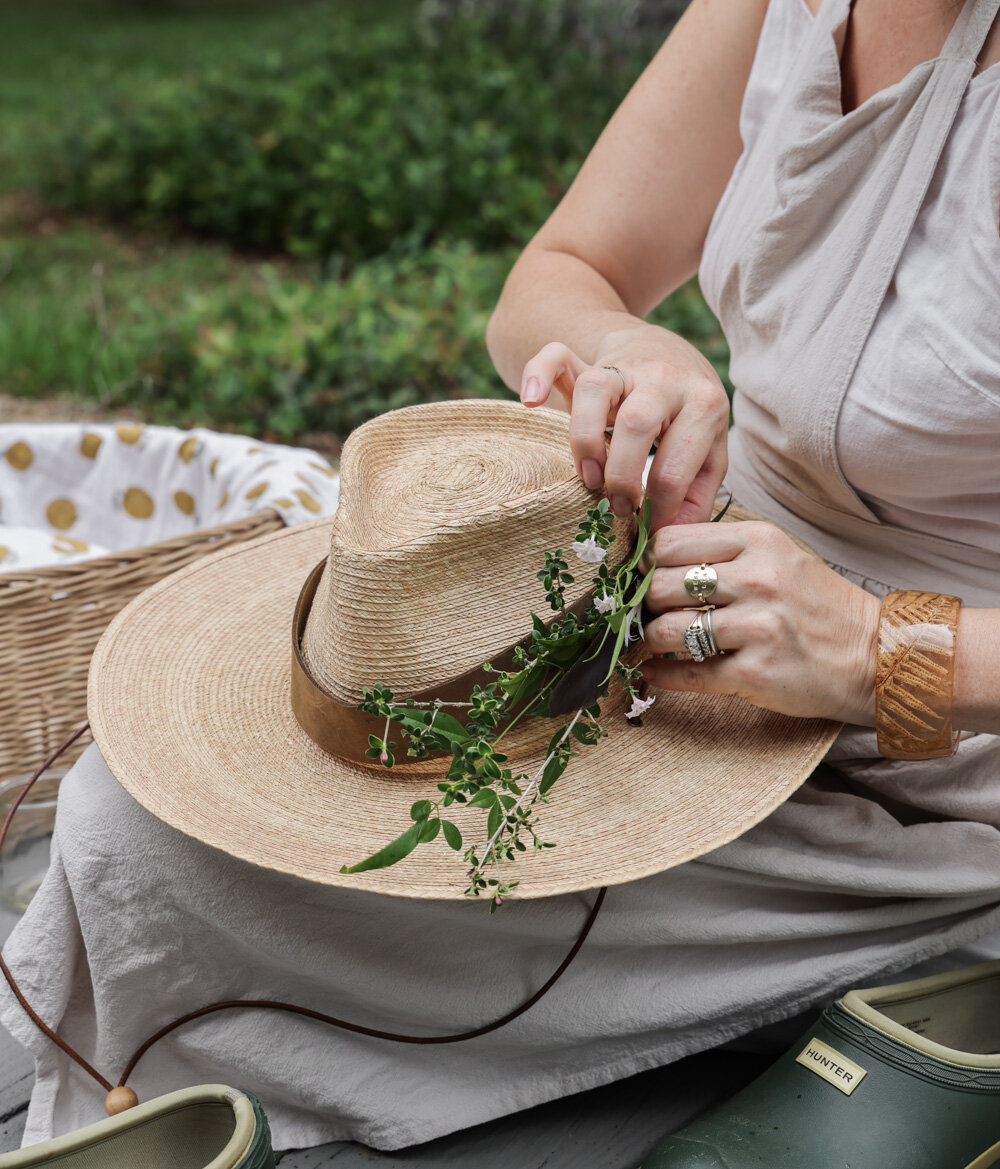
And, as with home decor, I delight in the opportunity to create endless , zero waste designs with the help of a few simple, practical belongings.

Improving Maternal Health Outcomes
For a bit there, life was moving slowly — the pregnancy, the recovery, getting established with the French farmhouse, business, communication, initiating the prairie cottage build, etc. Now everything is off the ground and running in one stage or another, and life is a tangle of constant designing, breastfeeding, collaborating, editing, laundry, untangling charging cables, planning, setting alerts, and troubleshooting.
No matter the pace, I’m so thankful to do everything with my children by my side — or, to be more precise, on my lap (West) and at my breast (Léa Lou).

What a privilege it is to have reached this point. What a privilege it has always been, whereas so many women are denied meaningful support and quality care from the onset of their pregnancies. The impacts of such treatment and lack of care are immeasurable.
There’s currently a maternal health crisis in America, and it disproportionately impacts Black and Indigenous women.
I believe the country needs work towards improving maternal health outcomes, implement education on bias, racism, and discrimination for maternity care providers, and invest in equitable care and community-based initiatives to reduce levels of and exposure to climate change-related risks for moms and babies.
If you are looking to learn more and/or become an advocate for birthing justice, you can do so easily. Visit Every Mother Counts, or click here for further details on the Black Maternal Health Momnibus Act of 2021.
In this post, I’m wearing work by Native Fashion Artist Jamie Okuma.